NEED HELP FAST? We have over 40 years' experience with Bulk Material Handling, Packaging, and Processing.   (979) 217-1480 GET A QUOTE

NEED HELP FAST?   (979) 217-1480   GET A QUOTE

2026 Top Automated Packaging System Suppliers?

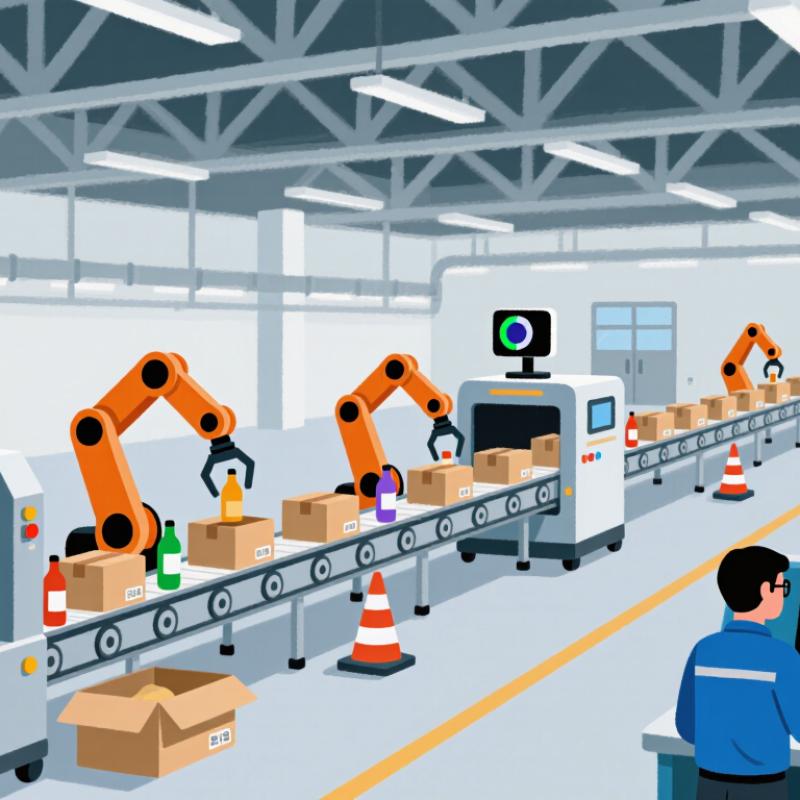
Choosing the right supplier for an automated packaging system in 2026 will require more than comparing machine prices. Packaging lines now connect fillers, conveyors, robotic pickers, case packers, vision inspection, and warehouse software. A weak link can stop the entire line.

As Jorge Izquierdo, Vice President of Market Development at PMMI, has noted, “Automation is a key strategy for manufacturers looking to address labor shortages and increase productivity.” His point remains practical. Automation should solve a measurable production problem, not simply add impressive technology.

This guide examines the top automated packaging system suppliers through real operating criteria. These include line speed, changeover time, product handling, integration experience, remote support, spare-parts access, and operator training. A supplier may look strong in a brochure but struggle with sticky products, irregular containers, dusty environments, or frequent format changes.

Small details matter.

For example, a ten-minute changeover can protect an entire production shift. A clear touchscreen can reduce operator mistakes during a busy night run. Reliable sensors can prevent cartons from piling up near the case sealer. These details often separate a dependable system from an expensive bottleneck.

The ranking should not be treated as universal. A beverage producer, bakery, pharmaceutical manufacturer, and e-commerce warehouse need different solutions. Some suppliers excel at standardized high-speed lines. Others provide flexible equipment for smaller batches.

We compare their technologies, service networks, customization ability, and documented industry experience. The assessment also recognizes an uncomfortable truth: the cheapest quote may create the highest long-term cost. Installation delays, difficult maintenance, and limited integration support can quietly damage productivity.
2026 Top Automated Packaging System Suppliers?

What Are Automated Packaging Systems?

Automated packaging systems are integrated machines that prepare, fill, close, inspect, and move packaged products. They combine feeders, conveyors, sensors, programmable controls, vision inspection, case packers, and palletizing equipment. The system may handle one package type or adjust between several formats. In practice, operators still monitor materials, changeovers, safety conditions, and quality records. They are not simply faster machines.

Their value becomes clearer through measurable production data. The International Federation of Robotics reported 541,302 industrial robots installed worldwide in 2023. Not all serve packaging, but the figure shows automation’s expanding industrial role. Deloitte’s 2024 Smart Manufacturing and Operations Survey found that 86% of manufacturing leaders view smart manufacturing as important for future competitiveness. Packaging lines increasingly connect machine data with production planning, maintenance alerts, and traceability records.

A reliable system should reduce manual handling, control fill accuracy, and limit seal defects. It should also recover quickly after a jam. Small details matter, such as tool-free guides and clearly visible sensors. Energy use deserves attention too. A poorly sized conveyor can waste power while adding no useful capacity. That mistake is easy to make. Integration quality often matters more than purchasing the most advanced equipment. In my experience, factories sometimes automate one task and overlook upstream variation. The result can be a faster line with the same bottleneck. Sources: International Federation of Robotics, World Robotics 2024; Deloitte, 2024 Smart Manufacturing and Operations Survey.

2026 Top Automated Packaging System Suppliers? — What Are Automated Packaging Systems?

Automated packaging systems combine conveying, filling, sealing, labeling, inspection, case packing, and palletizing equipment with sensors and control software. The chart shows representative throughput ranges commonly specified for major automated packaging equipment categories.

Throughput is shown in units per minute. Actual performance depends on product characteristics, package dimensions, changeover requirements, line layout, and inspection or quality-control steps.

How to Evaluate Automated Packaging System Suppliers in 2026

In 2026, evaluating automated packaging system suppliers requires more than comparing brochures or hourly output claims. A reliable supplier should explain how its equipment performs with your actual products, packaging materials, and production targets. Ask for a supervised factory acceptance test using representative cartons, films, labels, or containers. Record changeover time, reject rates, line speed, noise, and operator actions. Small details matter. A ten-minute adjustment can become hours each week.

Review the supplier’s engineering experience across feeding, filling, sealing, inspection, case packing, and palletizing. Confirm how the proposed system communicates with existing controls, warehouse software, and quality records. Request clear drawings, risk assessments, maintenance schedules, spare-parts lists, and training plans. Strong suppliers provide measurable service commitments, remote support procedures, and local response options. Speak with recent customers operating similar shifts, volumes, and product variations. Their maintenance logs may reveal more than a polished demonstration.

Evaluate total cost over several years, including installation, utilities, tooling, software updates, downtime, and technician visits. Check whether performance guarantees define acceptable waste, uptime, and changeover conditions. Ask who owns production data and how access is protected. Compliance documentation should match the destination market and your internal safety procedures. Do not accept vague claims. Still, no evaluation is perfect. A pilot may expose weaknesses that a questionnaire misses. Leave room for human judgment, because real lines rarely behave like test samples.

2026 Top Automated Packaging System Suppliers? - How to Evaluate Automated Packaging System Suppliers in 2026

Evaluation Dimension Recommended 2026 Benchmark Evidence to Request Weight Scoring Guidance
Line Throughput Validated speed should meet the required production rate with at least 10% spare capacity. Factory acceptance test, cycle-time study, and product-specific speed results. 15% 5 = exceeds target by 10% or more; 3 = meets target; 1 = below target.
Overall Equipment Effectiveness A sustained OEE target of approximately 70%–85% is a practical range for many automated packaging lines. OEE calculation method, historical production data, downtime logs, and loss-tree analysis. 12% 5 = above 85%; 3 = 70%–85%; 1 = below 70%.
Changeover Performance Routine product or format changeovers should generally be completed in 30–60 minutes, depending on complexity. Timed changeover demonstration, tooling list, recipe-management procedure, and restart checklist. 10% 5 = under 30 minutes; 3 = 30–60 minutes; 1 = over 60 minutes.
Packaging Quality Verify seal integrity, label position, code readability, case formation, and product protection against agreed specifications. Quality-control plan, capability studies, sample packs, reject-rate data, and inspection-system specifications. 12% 5 = capability demonstrated with documented controls; 3 = partially demonstrated; 1 = unsupported claims.
System Integration The system should integrate with upstream and downstream equipment, industrial networks, MES, ERP, and plant data systems. Network architecture, supported communication protocols, interface-control document, and integration references. 10% 5 = proven end-to-end integration; 3 = standard interfaces available; 1 = extensive custom work required.
Safety and Compliance Risk assessment, guarding, emergency stops, safety controls, electrical conformity, and applicable regional requirements must be documented. Risk assessment, safety validation report, conformity documentation, manuals, and training records. 10% 5 = complete documentation and validation; 3 = minor gaps; 1 = significant compliance risk.
Service Response and Spare Parts Critical technical support should be available 24/7 for high-volume operations, with defined response and parts-delivery targets. Service-level agreement, escalation procedure, technician coverage, spare-parts list, and regional inventory policy. 10% 5 = local support and defined response times; 3 = standard business-hour support; 1 = unclear coverage.
Total Cost of Ownership Compare purchase price, installation, utilities, labor, consumables, maintenance, software, upgrades, and end-of-life costs over 5–10 years. Itemized quotation, utility consumption, preventive-maintenance schedule, licensing terms, and lifecycle-cost model. 11% 5 = lowest verified lifecycle cost; 3 = competitive; 1 = significant undisclosed costs.
Sustainability and Resource Efficiency Assess energy use, compressed-air demand, material waste, recyclable packaging compatibility, and options for lightweighting. Utility measurements, material-waste data, energy-saving features, environmental documentation, and packaging trials. 5% 5 = measured savings and broad material compatibility; 3 = standard efficiency; 1 = limited data.
Implementation and Training The supplier should provide project management, installation, commissioning, operator training, maintenance training, and ramp-up support. Project schedule, responsibility matrix, commissioning plan, training syllabus, and acceptance criteria. 5% 5 = complete local implementation plan; 3 = standard support; 1 = customer-led deployment.
Recommended Evaluation Method 100% Weighted score = rating from 1–5 × dimension weight
Supplier Selection Rule: Require product-specific testing, written performance guarantees, a complete total-cost model, documented safety validation, and reference-site verification before awarding the project.

Top Automated Packaging System Suppliers for 2026

Top Automated Packaging System Suppliers for 2026

Top automated packaging system suppliers for 2026 will be judged by integration quality, not machine speed alone. PMMI’s 2024 State of the Industry report valued U.S. packaging machinery shipments at approximately $10.3 billion in 2023. That scale reflects strong demand for filling, cartoning, palletizing, inspection, and end-of-line automation.

Leading suppliers should provide complete production cells with conveyors, robotic handling, vision inspection, and centralized controls. The International Federation of Robotics reported 541,302 industrial robots were installed worldwide in 2023. Packaging operations are benefiting from this wider robotics trend, especially where labor shortages and repetitive tasks affect output. Still, automation can disappoint without accurate product data and stable upstream processes.

Look for suppliers with documented factory acceptance testing, remote diagnostics, and local service coverage. A practical evaluation should measure changeover time, uptime, reject rates, energy use, and operator training hours. The best proposals include line simulation and clear spare-parts plans. They should also support recognized machine-safety and cybersecurity practices.

Ask for proof.

A supplier may promise 95% availability, yet real performance depends on materials, maintenance, and shift discipline. That is where many comparisons become too optimistic. According to the Smithers report on packaging automation trends, digital monitoring and connected equipment remain important growth areas through the decade. Buyers should request customer references, verified performance records, and a pilot test using their own packaging formats.

Key Technologies and Applications in Automated Packaging

Automated packaging in 2026 depends on coordinated technologies, not speed alone. Machine vision checks labels, seals, fill levels, and damaged cartons. Robotic arms then pick products with consistent force and positioning. Small errors matter. A misplaced sensor can stop an entire line.

Edge computing helps equipment react within milliseconds, while cloud platforms track output, downtime, and maintenance trends. Digital twins can test layout changes before physical installation. In food, personal care, and electronics, these tools support case packing, palletizing, inspection, and flexible product changeovers. Recyclable materials also require gentler handling, because excessive pressure may deform lightweight packs.

Practical evaluations should examine integration, operator training, data security, and spare-part availability. A capable supplier should provide documented validation, clear performance limits, and local technical support. Experience shows that the fastest machine is not always the best investment. Poorly calibrated vision systems may reject good products or miss subtle defects. No system is flawless. Human review still matters during unusual faults, material changes, and new product launches. The strongest automated packaging systems combine measurable efficiency with realistic maintenance plans.

How to Choose the Right Packaging System Supplier

Choosing an automated packaging system supplier in 2026 requires more than comparing machine prices. Start with your product, daily output, and available floor space. A supplier should study these details before recommending equipment. Ask for a live test using your actual containers, labels, and closure materials. Watch changeover time. A line that runs quickly but needs forty minutes between formats may reduce real output. Request documented data on speed, reject rates, energy use, and maintenance intervals.

Experience appears in practical questions. Can the team explain how dust, fragile surfaces, or uneven product sizes affect feeding? Can technicians respond quickly when a sensor fails? Check training plans, spare-parts access, software support, and remote diagnostic limits. Ask for references from facilities with similar volumes, not impressive but unrelated installations. Inspect acceptance criteria carefully. Vague promises create expensive disagreements after installation.

Reliable suppliers welcome difficult questions and disclose operating assumptions. They should identify what their system cannot handle. That honesty matters. Review warranty coverage, installation responsibilities, safety documentation, and future expansion costs with an independent engineer. A site visit can reveal noise, awkward operator access, or cleaning problems that a presentation hides. I have learned that the cheapest quotation often omits integration work. Still, no evaluation is perfect; test your assumptions with production staff before signing. Their daily experience may challenge your carefully prepared spreadsheet.