NEED HELP FAST? We have over 40 years' experience with Bulk Material Handling, Packaging, and Processing. (979) 217-1480 GET A QUOTE
NEED HELP FAST? (979) 217-1480 GET A QUOTE
What Are the Best Bulk FIBC Bag Suppliers in China?
Choosing reliable Bulk Fibc Bag Suppliers in China requires more than comparing prices on a spreadsheet. These bags may carry cement, grain, minerals, chemicals, or recyclable materials. Their performance depends on fabric strength, coating quality, stitching, loop design, and safe working load. A low quotation can hide weak seams or inconsistent dimensions. Details matter.
Experienced buyers usually examine factory capability before requesting a large order. They review production equipment, quality procedures, export records, and product testing documents. They may also request samples with matching fabric weight, liner thickness, printing, and lifting-loop construction. A practical supplier should explain how it controls raw polypropylene, weaving, cutting, sewing, and final inspection. Photos help, but independent verification is stronger.
This guide introduces leading Chinese manufacturers and explains how to compare them responsibly. It considers product range, customization, communication, lead times, packaging, and after-sales support. Certifications can be useful, but buyers should confirm their scope and validity. Food-contact, hazardous-material, or UN-rated applications may require additional documentation and testing. Requirements vary by destination.
No supplier is perfect. Even a capable factory may struggle with urgent changes or unusual specifications. That is why clear drawings, approved samples, written tolerances, and staged inspections remain important. Buyers should also check payment terms and dispute procedures before production begins. The best choice is not always the cheapest. It is the supplier that delivers consistent bags, credible evidence, and practical support over time.
What Are FIBC Bags and Why Buy Them in Bulk?
What Are FIBC Bags and Why Buy Them in Bulk?
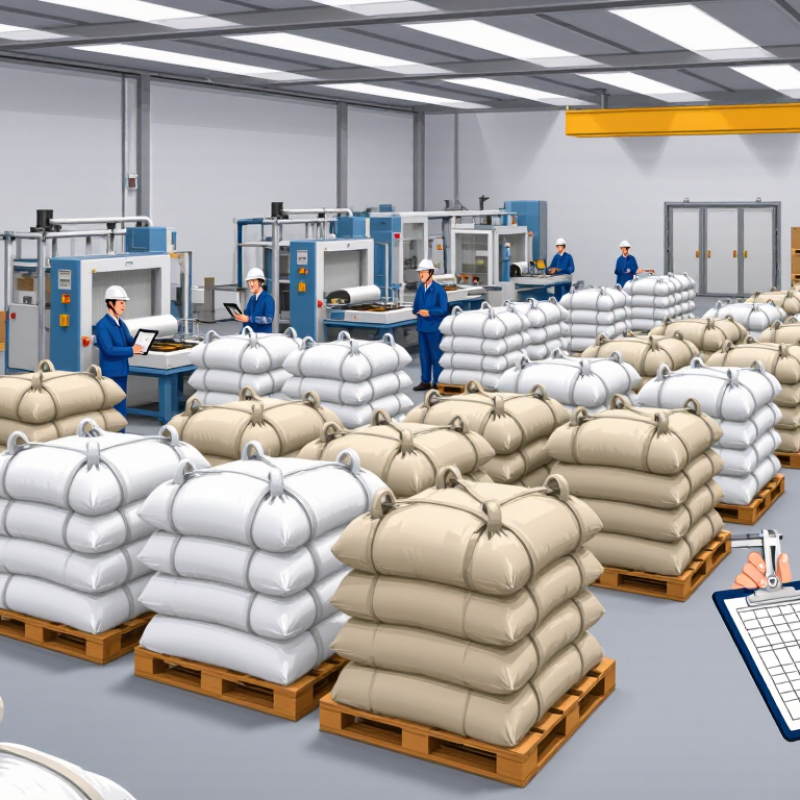
FIBC bags are large woven polypropylene containers for dry, flowable materials. They commonly carry 500 to 2,000 kilograms, depending on their safe working load. Their flexible shape saves warehouse space when empty. A forklift can also move a filled bag quickly. Grand View Research estimated the global FIBC market at about USD 5.3 billion in 2023. Its report projects continued growth through 2030, supported by construction, agriculture, food, and chemical packaging demand. These figures explain why bulk purchasing attracts importers and distributors.
Buying in bulk usually lowers unit costs, packaging waste, and repeated freight expenses. However, price alone is a weak decision tool. Reliable Chinese suppliers should provide clear specifications, including fabric weight, liner material, lifting-loop design, safe working load, and safety factor. Request production samples and third-party testing records. The bags should match the intended material and filling method. Small details matter, such as a stitched bottom, a dust-proof flap, or four loops that remain balanced during lifting.
A factory audit can reveal stitching quality, clean storage, and traceable inspection records. ISO 21898 provides technical guidance for packaging used with non-dangerous goods, so buyers should ask how the supplier applies relevant requirements. No supplier is perfect. Even a strong sample may not represent every production batch. That is why purchase contracts should define inspection levels, tolerances, replacement terms, and delivery dates. A slightly higher quote may be sensible when rejected bags could delay an entire shipment.
What Are the Best Bulk FIBC Bag Suppliers in China? - What Are FIBC Bags and Why Buy Them in Bulk?
Practical comparison criteria and typical specifications for evaluating bulk FIBC bag suppliers
| Evaluation Dimension | Typical Bulk-Market Data | Common FIBC Specification | Why It Matters | Recommended Buyer Check |
|---|---|---|---|---|
| Bag Construction | Woven polypropylene fabric is the standard material for most dry bulk applications. | Coated or uncoated PP fabric; optional polyethylene liner. | Polypropylene provides a strong, lightweight, and economical structure for industrial handling. | Request fabric construction, coating details, and liner specifications. |
| Safe Working Load | Approximately 500–2,000 kg per bag | Common capacities include 500 kg, 1,000 kg, 1,500 kg, and 2,000 kg. | The safe working load must match the product weight and the handling equipment used at the destination. | Confirm the rated load on the technical datasheet and printed bag label. |
| Safety Factor | Usually 5:1 or 6:1 | 5:1 is widely used for single-trip applications; 6:1 is commonly selected for reusable designs. | The safety factor indicates the relationship between the test load and the rated safe working load. | Ask for test evidence and verify whether the bag is single-trip or reusable. |
| Bag Volume | Approximately 0.5–2.0 m³ | Typical sizes range from about 900 × 900 × 900 mm to 1,100 × 1,100 × 1,200 mm. | Volume affects filling efficiency, warehouse utilization, shipping cost, and product compatibility. | Match the dimensions to the bulk density and filling height of the material. |
| Top and Bottom Design | Standard, duffle top, spout top, flat bottom, and discharge spout options are common. | Filling and discharge openings can be customized for manual or automated systems. | The correct opening design reduces dust, loading time, and product loss during transfer. | Confirm opening dimensions, closure method, and compatibility with filling equipment. |
| Liner Requirement | Optional for many dry materials; frequently used for fine powders or moisture-sensitive goods. | Loose liner, attached liner, form-fit liner, or aluminum-coated liner. | A liner can improve moisture resistance, contamination control, and powder retention. | Specify liner thickness, material, attachment method, and food-contact requirements when applicable. |
| Fabric Coating | Coated fabric is commonly selected when improved moisture and fine-particle retention are needed. | Coating is generally applied to the inside or outside surface of woven PP fabric. | Coating can reduce leakage and protect the contents from external humidity, but it may reduce breathability. | Choose coated or uncoated fabric according to the material’s moisture and ventilation needs. |
| Printing and Identification | One- to four-color flexographic printing is widely available for bulk orders. | Printing may include handling symbols, batch information, product details, and regulatory markings. | Clear identification supports traceability, safe handling, and warehouse organization. | Approve a production sample or digital proof before mass production. |
| Indicative Bulk MOQ | Often about 500–5,000 bags | Lower quantities may be available for standard designs; custom printing and liners often require higher volumes. | Order quantity affects unit price, tooling allocation, printing setup, and production efficiency. | Compare quotations at the same specification, quantity, packaging method, and delivery term. |
| Typical Production Lead Time | Approximately 15–35 days after design and order confirmation | Standard products are generally faster than customized bags with liners, special fabric, or complex printing. | Lead time influences inventory planning and the risk of production interruption. | Obtain a written schedule covering sample approval, production, inspection, and dispatch. |
| Quality Control | Important checks include dimensions, fabric weight, seam strength, load performance, and appearance. | Inspection may be performed during production and before shipment. | Consistent quality reduces rejected loads, handling accidents, leakage, and replacement costs. | Request inspection records, product samples, and an agreed acceptance standard. |
| Compliance Documentation | Available documents depend on the product application and destination market. | Possible documents include technical datasheets, test reports, food-contact declarations, and UN packaging certification. | Documentation may be required for regulated materials, food-related applications, or hazardous goods. | Define the required documents before placing the purchase order. |
| Shipping Efficiency | Empty FIBC bags are commonly compressed and packed in bundles or on pallets. | Shipping volume is influenced by folding method, bundle size, pallet configuration, and container loading plan. | Efficient packing can significantly reduce freight cost per bag in large-volume purchases. | Compare the packed volume, gross weight, pallet count, and estimated container utilization. |
| Best Bulk-Buying Advantage | Bulk purchasing can reduce unit cost and provide more consistent specifications across production lots. | Long-term orders may support standardized dimensions, recurring production schedules, and customized packaging. | Lower purchasing cost is most valuable when quality, delivery reliability, and storage capacity are controlled. | Evaluate total landed cost rather than unit price alone. |
Data note: The figures above are typical industry ranges for general FIBC purchasing and are not tied to any specific company or brand. Final specifications, certifications, minimum order quantities, lead times, and prices should be confirmed in a written quotation and approved technical document.