NEED HELP FAST? We have over 40 years' experience with Bulk Material Handling, Packaging, and Processing.   (979) 217-1480 GET A QUOTE

NEED HELP FAST?   (979) 217-1480   GET A QUOTE

How to Choose Cookie Boxes for Global Shipping in 2026?

Choosing Cookie Boxes for global shipping in 2026 requires more than attractive printing. The right package must protect delicate cookies through sorting centers, long flights, changing temperatures, and repeated handling. A box that looks sturdy on a warehouse shelf may still collapse inside a damp delivery van. That difference matters.

Start with the cookie itself. Soft cookies need moisture control, while crisp varieties need protection from crushing. Consider food-safe liners, internal dividers, tamper-evident seals, and enough cushioning for empty spaces. Corrugated paperboard can provide strong protection without excessive weight. Lower shipping weight often reduces costs and environmental impact. Still, lighter packaging is not automatically better. I have seen beautiful Cookie Boxes fail because their corners softened after exposure to humidity.

Destination conditions also deserve careful attention. Packaging suppliers should provide material specifications, test results, and clear information about food-contact suitability. Export teams should review current carrier requirements and destination packaging rules before production. Requirements can vary between markets and may change during the year. Do not rely on an old supplier statement.

Test before scaling.

Place filled boxes in a vibration test, a compression test, and a realistic temperature cycle. Photograph the cookies afterward. Check broken edges, shifted inserts, loose labels, and seal damage. This process may reveal uncomfortable weaknesses. That is useful. No packaging design is perfect, but practical testing makes its limits visible. The best choice balances protection, presentation, cost, sustainability, and reliable performance across the entire shipping journey.
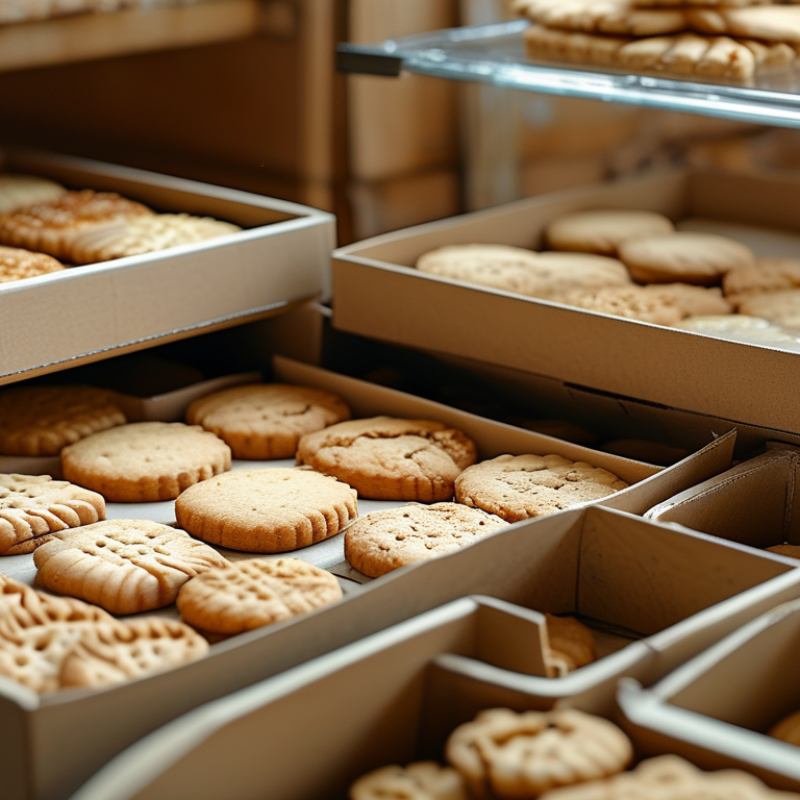
How to Choose Cookie Boxes for Global Shipping in 2026?

Define Shipping Requirements for International Cookie Delivery

How to Choose Cookie Boxes for Global Shipping in 2026?

Define Shipping Requirements for International Cookie Delivery

International cookie delivery starts with the route, not the box design. Identify the destination, transit time, climate, handling conditions, and delivery method. A two-day air shipment needs different protection from a three-week mixed transport route. Confirm whether the package may face rain, freezing temperatures, heat, or repeated handling.

Choose a rigid food-safe box with enough space for cushioning, but avoid excessive movement. Cookies should sit firmly without pressing against the lid. Moisture-resistant inner wrapping helps protect texture during humid journeys. For delicate designs, separate layers with food-safe dividers. For brittle cookies, test drop resistance from several angles. Small details matter.

Tips: Measure the packed box, not the empty one. Record its weight, dimensions, and seal strength. Use temperature and humidity tests when shipping across seasons. Add clear product information and destination-required details, while checking current import requirements before dispatch. Do not assume one package works everywhere. A box that performs well in dry weather may fail after exposure to condensation. I once considered thicker cardboard the safest choice, but excessive rigidity increased shipping weight and cost. The better answer was a balanced structure with internal cushioning. Test before scaling.

How to Choose Cookie Boxes for Global Shipping in 2026?

Define the box requirements around the longest realistic transit window, customs delays, moisture exposure, and the need to prevent cookie movement.

Transit protection

Choose a rigid corrugated outer box and size the cookie box to limit empty space during handling.

Moisture control

Use a sealed inner bag or liner, especially when the shipment may cross humid climates or face temperature changes.

Shelf-life buffer

Select packaging that protects texture and appearance for the full planning range, including customs clearance time.

Planning ranges shown are typical international delivery windows and are not guaranteed service times. Confirm the destination’s customs and import requirements before dispatch.

Compare Cookie Box Materials, Strength, and Food-Safety Standards

How to Choose Cookie Boxes for Global Shipping in 2026?

Global shipping exposes cookie boxes to compression, humidity, vibration, and repeated handling. Material selection affects both protection and food safety. Corrugated fiberboard offers strong stacking performance at moderate weight. Choose a board with a tested edge-crush rating, not just a thick appearance. Rigid paperboard looks refined but may deform in wet conditions. Metal tins resist crushing and moisture, yet they increase weight and freight emissions. Molded fiber can reduce plastic use, but its coatings need careful review. Small details matter.

For fragile or decorated cookies, use internal dividers and a snug food-safe liner. Empty space allows movement, while excessive pressure can damage icing. Drop-test packed boxes from realistic handling heights. Then inspect corners, seals, and cookie fragments. A box that survives one test may fail after humidity exposure. Include a moisture barrier when shipping through tropical climates. However, laminated layers can complicate recycling. This trade-off deserves honest assessment.

Food-contact compliance must match every destination country. Depending on the market, requirements may involve EU food-contact rules, U.S. FDA regulations, or local GB standards. Ask suppliers for a current declaration of compliance, migration test results, and traceability records. Check inks, adhesives, coatings, and recycled fibers, not only the main board. Generic “food-safe” claims are insufficient. Request samples from the actual production line. Hand-made samples can hide weak seams, uneven coatings, or inaccurate dimensions. That mistake is easy to miss.

Choose Protective Designs for Temperature, Moisture, and Impact

How to Choose Cookie Boxes for Global Shipping in 2026?

Global shipping exposes cookies to heat, humidity, compression, and sudden drops. A box must manage all four risks. USDA FoodKeeper guidance lists many homemade cookies for two to three weeks at room temperature. That window assumes stable storage, not a hot delivery van. Use a rigid paperboard carton with a snug inner tray. Leave minimal movement around each cookie. Too much empty space invites breakage.

Moisture control deserves equal attention. Cookies absorb humidity quickly, especially those with crisp edges or chocolate coatings. Use a food-safe moisture barrier, such as a sealed inner pouch, while avoiding direct contact with decorative inks. Add desiccant only when suitable for food packaging and regional shipping conditions. Packaging trials should follow ASTM D4169 or ISTA 3A methods. These protocols examine vibration, compression, drops, and atmospheric conditioning. In practical tests, drop corners first. They often reveal weaknesses hidden by flat laboratory checks.

Temperature protection needs restraint. Thick insulation can trap condensation during cold-to-warm transitions. A reflective liner, ventilation space, and stable formulation may work better than excessive insulation. The 2023 NRF and Appriss report estimated 14.5% of U.S. retail sales were returned, worth about $743 billion. Damaged deliveries add unnecessary waste and customer frustration. I have found that “maximum protection” is not always the best design. A lighter box may survive better when its inserts stop sideways movement. Mistakes remain possible, especially across multiple climates. Test summer and winter routes separately.

Match Box Dimensions to Cookies, Fillers, and Shipping Costs

How to Choose Cookie Boxes for Global Shipping in 2026?

Match Box Dimensions to Cookies, Fillers, and Shipping Costs

Cookie boxes should fit the product, not an imaginary standard size. Measure each cookie after cooling, including its height, icing, and fragile toppings. Add roughly 8–12 millimeters for protective clearance. Too little space causes pressure marks. Too much space invites movement.

Use a rigid inner tray, paper cushioning, or molded inserts around delicate cookies. Avoid loose filler that allows cookies to slide during vibration. The International Safe Transit Association’s testing guidance emphasizes compression, impact, and vibration checks for parcel packaging. A small trial shipment can reveal weak corners faster than a perfect spreadsheet.

I learned this the hard way.

Dimensional weight can quietly raise international shipping costs. Many carrier calculations divide length × width × height by a dimensional divisor, often 139 or 166, depending on the service. A box measuring 30 × 20 × 15 centimeters occupies 9,000 cubic centimeters before fillers. Reducing just three centimeters from its length saves 900 cubic centimeters. That difference matters across thousands of parcels.

Pitney Bowes reported 161.8 billion global parcels in 2023, showing how intensely delivery networks are used. Smaller, stable cartons can improve pallet efficiency, but thinner walls may fail testing. Recheck the compromise.

Test filled boxes in cold and warm conditions, because buttercream, chocolate, and air-filled cushions behave differently. Reliable packaging is measured after packing, not guessed before it.

Verify Global Labeling, Customs, and Sustainable Packaging Rules

How to Choose Cookie Boxes for Global Shipping in 2026?

Cookie boxes must satisfy more than appearance. Check the destination’s food-contact, labeling, and recycling requirements before ordering large quantities. Labels may need ingredients, allergens, net weight, best-before dates, storage instructions, and the country of origin. Requirements differ across borders. Customs documents should match the package exactly, including the product description, quantity, value, and appropriate tariff classification. Small inconsistencies can delay clearance.

Use a rigid, food-safe inner layer and a moisture-resistant outer box. A tight fit reduces breakage and unnecessary void space. It also lowers dimensional shipping weight. The OECD Global Plastics Outlook reported that packaging represented about 40% of global plastic waste in 2019. That figure makes material selection difficult to ignore. Recyclable paper is useful, but only when local collection systems can process it. “Compostable” claims need evidence and clear disposal instructions.

Test the box with stacked samples, vibration, humidity, and temperature changes. A cookie that arrives cracked still creates waste. Include a commercial invoice and verify customs rules for every destination. The International Trade Centre’s trade data tools can help confirm tariff information, but they are not a substitute for local review. Avoid unsupported environmental claims. I once treated a lighter box as automatically better; it failed during compression testing. Shipping efficiency needs proof. Keep records of supplier specifications, test results, and label revisions. Rules change. Your packaging process should be willing to change, too.

Article Source: