NEED HELP FAST? We have over 40 years' experience with Bulk Material Handling, Packaging, and Processing. (979) 217-1480 GET A QUOTE
NEED HELP FAST? (979) 217-1480 GET A QUOTE

Choosing reliable packaging machines manufacturers can shape production speed, product protection, and long-term operating costs. For global buyers, the decision involves more than comparing catalog prices. Machine design, factory experience, service coverage, spare parts, and documentation all deserve close attention.
A capable manufacturer should explain how its equipment performs with specific materials, package sizes, and production speeds. Ask for test videos, sample results, and clear maintenance schedules. A factory visit can reveal practical details, such as clean assembly areas, organized wiring, and stocked replacement parts. These details often matter more than polished brochures.
Real-world performance is rarely perfect. Some machines may require adjustments when film thickness, humidity, or product shape changes. That is worth discussing openly. Buyers should request factory acceptance testing and confirm installation support before signing an agreement. Technical training, remote assistance, and response times can strongly influence the total ownership experience.
This guide examines leading packaging machines manufacturers serving international markets. It considers filling, sealing, labeling, wrapping, cartoning, and integrated production lines. Each manufacturer should be evaluated against its application, not a generic ranking. A trusted supplier provides traceable specifications, realistic capacity figures, and consistent quality control.
Still, no single manufacturer fits every business. A small food producer may value flexible changeovers, while a large beverage plant may prioritize continuous throughput. Budget limits, local service access, and future expansion also affect the choice. Careful comparison reduces costly surprises, although it cannot remove every risk. That is part of responsible sourcing.
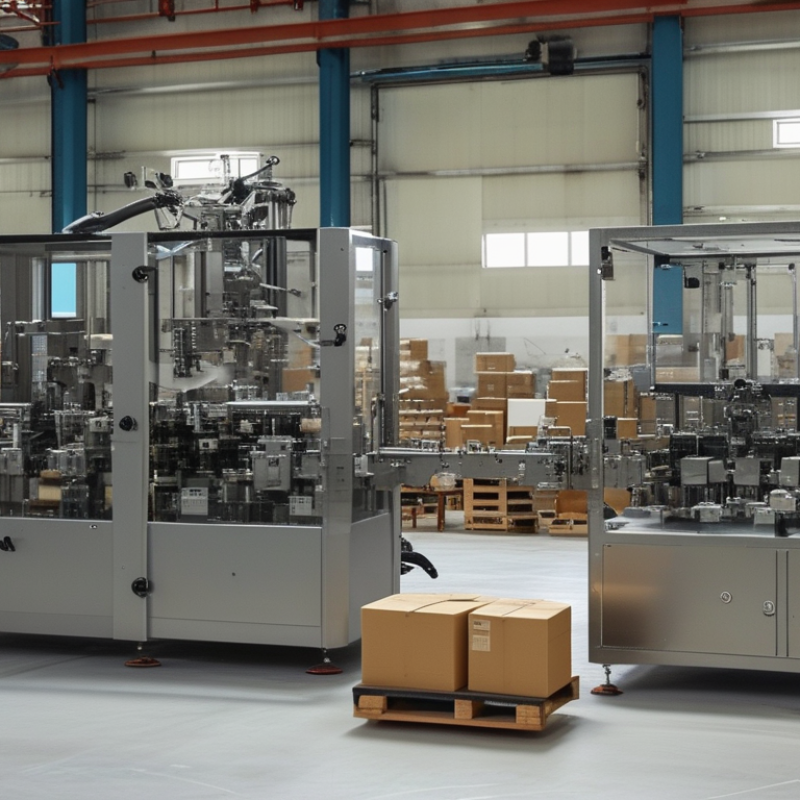
Packaging machines serve different production problems, not one universal formula. Form-fill-seal systems handle snacks, powders, and medical sachets. Filling and capping machines support beverages, cosmetics, and household liquids. Cartoners and case packers organize cartons for retail distribution. Labeling, checkweighing, and vision inspection improve traceability and reduce packing errors. Palletizing systems protect heavy loads during warehouse movement.
According to Grand View Research, the global packaging machinery market was valued at approximately USD 45.78 billion in 2023. The report projects a 5.8% compound annual growth rate from 2024 to 2030. Food and beverage remain major users, while pharmaceutical production demands tighter dosing and validation. In plant evaluations, speed often attracts buyers first. That can be a mistake. Changeover time, cleaning access, spare-parts availability, and operator training may affect total output more than maximum speed. I would also question any brochure promising effortless integration. Real factories rarely behave so neatly.
Tips: Match machine type with product texture, container shape, and target volume. Check sanitation standards, electrical requirements, and local service coverage before purchasing. Request test runs using your actual materials. Measure rejects, changeover minutes, and energy use. A slower machine with stable performance may outperform a faster machine with frequent stoppages. Ask for documented results, not only impressive demonstrations.
Choosing packaging machine manufacturers requires more than comparing catalog prices. Grand View Research estimated the global packaging machinery market at USD 52.83 billion in 2023, with a projected 5.1% CAGR through 2030. This growth increases supplier choice, but also increases evaluation risk. Buyers should verify factory experience, application knowledge, and documented performance in similar production environments.
Ask for measured data, not attractive promises. Review throughput, changeover time, reject rates, energy use, and mean time between failures. Request a live factory acceptance test using your actual container, film, powder, or product. A two-minute demonstration is not enough. Technical documentation should cover electrical standards, guarding, sanitation, software access, and spare-part identification. Independent certification can support credibility, but it does not replace practical testing.
Service capability often separates a reliable supplier from a cheap one. Check local technicians, remote diagnostics, response times, training hours, and spare-parts availability. The Total Cost of Ownership should include installation, validation, maintenance, utilities, downtime, and future format changes. Smithers projects the wider global packaging market to reach approximately USD 1.2 trillion by 2028, showing why scalable equipment matters. Still, market forecasts can miss regional shocks. No scorecard is perfect. Leave room for operator feedback, pilot results, and uncomfortable questions before signing.
| Evaluation Dimension | What Global Buyers Should Assess | Relevant Benchmark or Verifiable Data | Evidence to Request | Suggested Priority |
|---|---|---|---|---|
| Machine Throughput | Confirm whether the rated output matches the required production volume under real operating conditions. | Measure in packs/min or units/hour Compare rated speed with sustained output using the intended product, film, container, and format. |
Factory acceptance-test report, production sample, speed test, and documented operating conditions. | High |
| Overall Equipment Effectiveness | Evaluate the combined effect of availability, performance, and quality rather than relying only on maximum speed. | OEE = Availability × Performance × Quality Require the calculation period and assumptions because results vary by product and shift pattern. |
Production logs, downtime records, reject-rate data, and a monitored customer reference installation. | High |
| Product and Format Flexibility | Check how easily the machine handles different product sizes, package formats, materials, and recipes. | Document changeover time in minutes List the supported format range, tooling requirements, and maximum number of products or pack sizes. |
Format drawings, changeover demonstration, tooling list, and validated product trials. | High |
| Changeover Efficiency | Assess the time, skill level, and number of operators needed to change from one product or package format to another. | Record time from last good pack to first good pack Include cleaning, adjustment, tooling replacement, and verification. |
Standard operating procedure, video demonstration, changeover checklist, and time-study results. | High |
| Packaging Accuracy | Verify filling, counting, weighing, sealing, labeling, or coding accuracy for the actual product. | Track average error and reject rate Acceptance limits should be defined for underweight, overweight, missing items, poor seals, and incorrect codes. |
Test-run results, calibration records, inspection-system specifications, and quality-control procedure. | High |
| Food and Product Safety | Review hygienic design, cleanability, material compatibility, and contamination-control measures where applicable. | Use applicable food-contact and sanitary requirements Stainless-steel product-contact areas, drainage, access for cleaning, and suitable lubricants should be assessed according to the application. |
Material certificates, hygienic-design drawings, cleaning instructions, risk assessment, and compliance declarations. | High |
| Electrical and Machine Safety | Determine whether the machine includes guarding, emergency stops, interlocks, safe access, and documented risk controls. | Verify conformity for the destination market Applicable requirements may include machinery safety, electrical safety, electromagnetic compatibility, and local workplace regulations. |
Risk assessment, electrical diagrams, safety-circuit validation, conformity documentation, and operating manual. | High |
| Automation and Controls | Assess the control interface, recipe management, alarm history, data access, remote diagnostics, and integration capability. | Check communication protocol and data requirements Confirm support for production records, batch tracking, user permissions, and integration with existing line controls. |
Controls architecture, software screenshots, communication list, cybersecurity policy, and integration test plan. | Medium |
| Energy and Utility Consumption | Compare electricity, compressed air, gas, water, and other utilities under a defined production condition. | Report kWh, compressed air volume, and water use per operating hour or production unit Data should state speed, product, duty cycle, and utility pressure. |
Utility-consumption test report, equipment datasheet, connected-load calculation, and operating assumptions. | Medium |
| Maintenance and Reliability | Review access to wear parts, preventive-maintenance intervals, lubrication points, and expected service requirements. | Track MTBF and MTTR where available MTBF means mean time between failures; MTTR means mean time to repair. Definitions must be consistent. |
Maintenance schedule, spare-parts list, failure history, recommended stock levels, and service procedures. | High |
| After-Sales Support | Evaluate commissioning, operator training, troubleshooting, technical response, and local or regional service coverage. | Set response and resolution targets in writing Clarify support hours, remote assistance, travel arrangements, and escalation procedures. |
Service-level agreement, training plan, support organization chart, installed-base references, and escalation contacts. | High |
| Spare-Parts Availability | Confirm the availability, lead time, storage conditions, and lifecycle status of critical components. | Classify parts by criticality and lead time Include wear parts, safety components, control hardware, sealing tools, sensors, and product-contact parts. |
Parts catalogue, quoted lead times, recommended spare-parts package, obsolescence policy, and warranty terms. | High |
| Installation and Commissioning | Assess site requirements, installation duration, utilities, floor space, line layout, and acceptance criteria. | Define FAT and SAT criteria Factory acceptance testing should precede shipment; site acceptance testing should confirm performance at the buyer’s facility. |
General arrangement drawing, utility schedule, installation manual, commissioning plan, and acceptance-test protocol. | High |
| Documentation and Training | Check whether manuals, drawings, parts lists, software backups, and training materials are complete and available in the required language. | Require controlled, revision-tracked documentation Documents should cover operation, maintenance, safety, troubleshooting, cleaning, and format changeover. |
Sample manuals, electrical and pneumatic schematics, training agenda, software backup procedure, and document index. | Medium |
| Total Cost of Ownership | Compare the full operating cost rather than purchase price alone. | TCO = Purchase + Installation + Utilities + Labor + Maintenance + Consumables + Downtime Use a common evaluation period and production volume for all quotations. |
Itemized quotation, operating-cost assumptions, warranty coverage, service rates, energy data, and five-year cost model. | High |
| Delivery and Project Management | Review manufacturing lead time, milestone control, change management, logistics responsibilities, and installation readiness. | Use a milestone-based project schedule Include design approval, long-lead procurement, assembly, FAT, shipment, installation, SAT, and production handover. |
Detailed project plan, responsibility matrix, progress-report format, logistics plan, and delay-management terms. | Medium |
| Sustainability and Material Efficiency | Assess material waste, recyclable packaging compatibility, energy efficiency, and opportunities to reduce packaging consumption. | Measure scrap rate and material use per saleable pack Evaluate compatibility with thinner films, recycled content, recyclable structures, or reduced-material formats where technically suitable. |
Material-trial results, scrap records, energy data, environmental statements, and packaging-material compatibility test. | Medium |
| Supplier Qualification | Verify manufacturing capability, quality management, financial stability, references, and experience with comparable applications. | Use a documented supplier-audit scorecard Assess quality systems, production capacity, engineering resources, traceability, and corrective-action performance. |
Quality certificates, audit reports, comparable project references, production-capacity statement, and corrective-action records. | High |
Global buyers often compare packaging machine manufacturers by technology before considering regional support. Vertical form-fill-seal systems suit snacks, grains, and other free-flowing products. Horizontal systems handle bars, trays, and individually wrapped goods. Liquid and paste fillers require accurate pumps, hygienic contact parts, and controlled dosing. Cartoners and case packers support high-volume lines, while robotic pick-and-place equipment improves flexibility for changing formats.
Regional strengths differ, although the boundaries are not absolute. East Asian manufacturers often provide broad model ranges and competitive automation options. European suppliers commonly emphasize precision engineering, modular design, and detailed validation records. North American manufacturers frequently focus on integration, operator access, and service response. South Asian and Latin American producers may offer practical customization for regional products and production scales. These patterns help, but they should not replace factory trials.
I have seen buyers choose machines by price alone. That shortcut can fail. A reliable assessment should review sample-pack results, changeover time, spare-parts access, software support, and documented safety compliance. Ask manufacturers to test the actual film, product, carton, or container. Small differences in humidity, seal temperature, and product weight can alter performance. Request training plans and maintenance schedules in writing. No ranking is perfect. A technically strong machine may still be unsuitable when local technicians cannot support it quickly.
Top Packaging Machines Manufacturers for Global Buyers
For international buyers, compliance is part of machine performance. A fast filler still fails if documentation, guarding, or electrical systems do not match the destination market. PMMI’s 2024 Global Packaging Trends report identifies labor shortages, automation, and sustainability as major investment drivers. Buyers should request risk assessments, material certificates, validation records, and manuals in the required language. Ask for evidence, not promises.
Customization should begin with the product, not a sales brochure. A manufacturer should test seal strength, film behavior, dosing accuracy, and changeover time using real samples. Interact Analysis reports that packaging automation demand continues to benefit from labor constraints and flexible production needs. That supports modular machines, recipe storage, remote diagnostics, and tool-free format changes. Small details matter. A five-minute adjustment can affect an entire shift.
Support remains decisive after installation. The best suppliers explain spare-parts lead times, technician coverage, training hours, and software responsibilities before signing. Smithers’ packaging market research continues to highlight sustainability and resource efficiency as important industry pressures. Therefore, buyers should measure energy use, material waste, and compressed-air consumption during acceptance testing. This step is often skipped. That is a mistake. No supplier can eliminate every startup issue, and international projects rarely run perfectly. A practical contract should define response times, escalation routes, factory testing, site testing, and corrective actions with measurable criteria.
Top Packaging Machines Manufacturers for Global Buyers
Procurement Steps for Selecting the Right Packaging Machine Supplier
Choosing packaging machinery starts with process evidence, not attractive brochures. In supplier audits, I record product dimensions, material behavior, target speed, and available floor space. A machine handling cartons may struggle with dusty powders or fragile sachets. Measure twice. Request a sample run using your real product and packaging film. Observe changeover time, seal quality, noise, cleaning access, and rejected packs. Details matter.
Build a written specification before contacting manufacturers. Include output per minute, acceptable weight variation, power supply, air requirements, safety features, and expansion plans. Ask each supplier to explain assumptions and exclusions in the quotation. Compare total ownership cost, including tooling, spare parts, training, installation, and maintenance. The cheapest offer can become expensive when one sensor stops production. Request references from similar applications, then ask users about response times, not only machine performance.
Verify technical competence through drawings, factory acceptance tests, inspection records, and a clear warranty process. Confirm who supervises commissioning and how remote support works across time zones. Use milestone payments tied to measurable deliverables. I have seen projects delayed because buyers approved layouts before checking operator access. That mistake is avoidable, though not always.