NEED HELP FAST? We have over 40 years' experience with Bulk Material Handling, Packaging, and Processing.   (979) 217-1480 GET A QUOTE

NEED HELP FAST?   (979) 217-1480   GET A QUOTE

What Are China Top Thermal Labelling Manufacturers?

China has become a major production base for thermal labels, but choosing a manufacturer requires more than comparing prices. Thermal Labelling suppliers differ in coating quality, adhesive performance, printing accuracy, and export experience. A reliable factory should explain its material choices clearly, provide test samples, and disclose production standards. It should also understand different applications, including retail tags, warehouse labels, shipping labels, and healthcare packaging.

Mike Fairley, a respected label-industry consultant and editor, describes labels as “information carriers.” That simple phrase matters. A thermal label must remain readable while passing through scanners, printers, shelves, cold rooms, or delivery networks. Poor coating can create faded barcodes. Weak adhesive can leave packages unidentified. Small defects become expensive problems.

This guide examines China’s top thermal labelling manufacturers through practical criteria. These include manufacturing capability, product consistency, customization, quality control, certifications, communication, and after-sales support. Factory scale alone is not enough. A smaller supplier may offer closer technical support, while a larger producer may provide stronger capacity and broader materials. Neither option is automatically better.

Real purchasing decisions are rarely perfect. Samples may perform well but reveal weaknesses during long-term storage. Product claims may sound impressive, yet evidence remains essential. Buyers should request specifications, batch records, adhesive tests, and clear delivery terms. The manufacturers discussed here are evaluated as potential partners, not simply as low-cost vendors. Careful verification still matters.

What Are China Top Thermal Labelling Manufacturers?

What Are China’s Thermal Labelling Manufacturers?

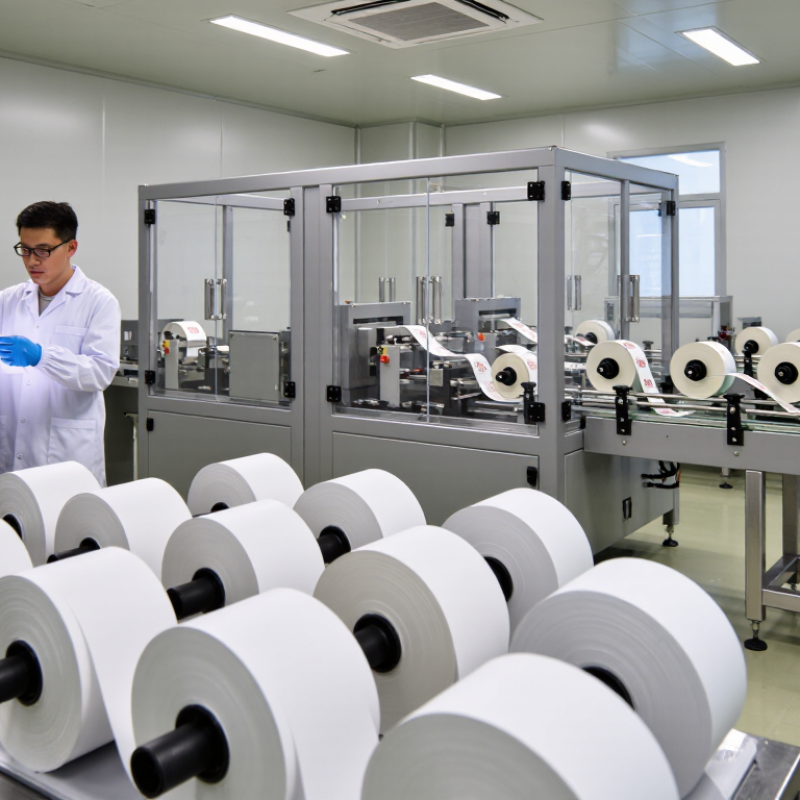
China’s thermal labelling manufacturers produce direct thermal and thermal transfer labels for retail, logistics, healthcare, and industrial use. They often provide material selection, adhesive coating, printing, slitting, and packaging within one production system. Experienced factories test face stock, adhesive strength, coating sensitivity, and roll dimensions before shipment. These details matter when labels pass through scanners, printers, or cold storage. A label that curls beside a freezer can slow an entire packing line. Small problems become expensive quickly.

Reliable manufacturers usually share technical data, sample rolls, inspection records, and clear production tolerances. Buyers should ask about paper or film grades, core sizes, winding direction, barcode readability, and storage conditions. Sensitive applications may require moisture, abrasion, heat, and migration testing. Factory audits can reveal whether inspections happen during production or only at the end. That difference is important. A polished sample does not prove stable mass production.

China’s manufacturing base also supports flexible order quantities, custom widths, variable data printing, and export packaging. However, low pricing deserves careful review. It may reflect thinner materials, weaker adhesives, or limited inspection rather than genuine efficiency. I have found that simple pilot orders expose problems earlier than large commitments. Still, pilot testing is not perfect. Seasonal humidity, printer settings, and transport time can change performance. Strong supplier relationships depend on written specifications, repeat testing, and honest discussion when a batch falls short.

How Are Thermal Labelling Manufacturers in China Classified?

How Are Thermal Labelling Manufacturers in China Classified?

Thermal labelling manufacturers in China are mainly classified by printing method. Direct thermal producers supply heat-sensitive labels for receipts, shipping cartons, and short-life packages. Thermal-transfer producers use ribbons for longer-lasting warehouse, healthcare, and industrial labels. This distinction matters. A label exposed to sunlight needs different testing from one used inside a cool warehouse. Fortune Business Insights reported that the global thermal printing market was valued at approximately US$43.5 billion in 2023. Such growth encourages manufacturers to specialize rather than sell one standard product.

A second classification uses material capability. Some factories focus on coated paper, while others process synthetic films, removable adhesives, freezer-grade stocks, or tamper-evident constructions. Larger suppliers often control coating, slitting, die-cutting, and inspection internally. Smaller converters may purchase master rolls and concentrate on customized sizes. Smithers’ label market research indicates continued growth in digital and variable-data label production through 2028. That trend favors factories with barcode verification, color control, and low-volume flexibility.

The third category concerns application and compliance. Export-oriented manufacturers usually document adhesive performance, roll consistency, and traceability. Domestic suppliers may compete through faster delivery and lower minimum orders. Custom manufacturers can match unusual cores, gaps, perforations, and winding directions. This classification is useful, but not perfect. A factory may belong to several groups. In practice, buyers should inspect production records, sample labels, storage tests, and audit results before trusting a catalogue description. Fancy equipment alone proves little.

Which Products and Technologies Do They Offer?

China’s leading thermal labelling manufacturers supply direct thermal and thermal transfer labels for logistics, retail, healthcare, food, and industrial applications. Direct thermal labels use heat-sensitive coatings and need no ribbon. They suit shipping labels, weighing tickets, and short-term receipts. Thermal transfer systems use a ribbon to create sharper, longer-lasting images. They work better for outdoor cartons, chemical containers, and warehouse identification.

Material choices can include coated paper, synthetic films, removable stocks, and freezer-grade adhesives. Some manufacturers produce labels that remain readable below freezing or resist moisture, abrasion, and moderate heat. Small details matter. A well-designed core prevents feeding problems. Accurate winding also reduces printer jams. Many suppliers offer barcode verification, variable-data printing, and custom die cutting. Some provide RFID inlays for item tracking, although RFID performance depends heavily on the package material and reader position.

Reliable manufacturers normally test print density, adhesive strength, edge quality, and barcode accuracy before shipment. Production samples should be checked on the customer’s actual printer, not only in a laboratory. This is where practical experience matters. A label may look excellent but fail on dusty cartons or cold plastic surfaces. Specifications can also be misunderstood. “Water-resistant” does not always mean waterproof. Buyers should request material data, tolerance ranges, and batch inspection records. Some suppliers offer sustainable papers and liner-reduction designs, but environmental claims still require careful verification. Performance, cost, and application conditions must be assessed together.

Thermal Labelling Technologies and Typical Product Durability

Direct thermal labels are commonly used for short-term shipping, retail, and receipt applications. Thermal transfer labels use a ribbon and are preferred for longer-lasting printing on paper, polypropylene, or polyester materials. RFID-enabled thermal labels combine printed information with electronic identification for inventory, logistics, and asset-tracking applications. Durability figures represent typical industry-use ranges and vary by material, adhesive, printing conditions, and exposure to heat, moisture, chemicals, or sunlight.

What Makes a Thermal Labelling Manufacturer a Top Choice?

What Makes a Thermal Labelling Manufacturer a Top Choice?

A top thermal labelling manufacturer delivers more than clean rolls. It controls coating weight, adhesive strength, and winding tension. These details affect barcode readability, printer jams, and label durability. Grand View Research estimates the global thermal labels market reached about USD 1.1 billion in 2023. It also forecasts growth at roughly 5% annually through 2030. That expansion raises quality expectations, not just production volume.

Experienced manufacturers test labels across different printers, temperatures, and packaging surfaces. They should provide traceable batch records and measurable inspection results. ISO 9001-based quality systems can support consistency, although certification alone proves little. I would examine sample labels after cold storage, friction, and moisture exposure. A label may look perfect on day one. It can still fail later. That uncomfortable detail deserves attention.

Tips: Ask for coating specifications, adhesive test data, and barcode verification records. Check whether the supplier can adjust roll width, core size, and winding direction accurately. Smithers’ label industry research highlights continuing demand for efficient, sustainable, and digitally managed production. Therefore, a strong manufacturer should reduce material waste and support recyclable or lower-impact options where practical. Service matters too. Fast technical replies, stable lead times, and clear corrective-action reports often separate reliable partners from attractive but risky suppliers. No factory is flawless. The best ones show how they find, explain, and fix mistakes.

How Can Buyers Compare Chinese Thermal Labelling Manufacturers?

Buyers should compare Chinese thermal labelling manufacturers through measurable performance, not catalogue claims. Grand View Research valued the global self-adhesive labels market at approximately USD 49 billion in 2023, showing strong demand but also intense supplier competition. Ask each manufacturer for recent test records covering label size, paper weight, adhesive type, coating, and roll winding. Small details matter.

Request samples printed on your actual printer and packaging surface. Check barcode quality against ISO/IEC 15416, especially after rubbing, moisture exposure, and temperature changes. A supplier may show a clean sample, yet the adhesive can lift from corrugated cartons within hours. Compare core diameter, roll length, splice limits, and maximum outer diameter. These affect machine stoppages and freight efficiency. Smithers’ packaging research also identifies digital and variable-data printing as continuing growth areas, making print consistency increasingly important.

Evaluate more than the factory price. Compare material yield, defect allowances, minimum order quantity, production lead time, replacement policy, and export documentation. Request batch traceability and a clear incoming inspection procedure. ISO 9001 certification helps, but it does not replace an on-site audit or independent testing. I would also compare three trial orders, not one. Three reveal patterns. My own comparison method is imperfect: I once underestimated carton humidity, and the cheapest adhesive failed first. Buyers should record every result in a weighted scorecard before choosing a long-term manufacturing partner.

What Are China Top Thermal Labelling Manufacturers? - How Can Buyers Compare Chinese Thermal Labelling Manufacturers?

Comparison Dimension Common Chinese Supplier Capability What Buyers Should Compare Recommended Verification Method
Label Types Direct thermal and thermal-transfer labels for logistics, retail, warehousing, manufacturing, healthcare, and food applications. Whether the supplier can produce the required label structure, winding direction, core size, roll diameter, and printer compatibility. Send printer specifications, artwork, and a sample roll for fit and performance testing.
Printing Technology Flexographic, digital, offset, gravure, and rotary printing are commonly available, depending on order size and design complexity. Print resolution, color consistency, barcode readability, variable-data capability, and suitability for short or long production runs. Request printed proofs and test barcodes using the buyer’s actual scanners and printers.
Thermal Material Coated direct-thermal paper, uncoated thermal paper, thermal-transfer paper, synthetic films, and specialty stocks are widely used. Image stability, sensitivity, whiteness, smoothness, resistance to heat, moisture, abrasion, chemicals, and plasticizer migration. Review the technical data sheet and conduct accelerated storage and environmental exposure tests.
Adhesive Options Permanent, removable, hot-melt, acrylic, freezer-grade, and high-temperature adhesive constructions are commonly offered. Initial tack, final adhesion, clean removability, temperature range, surface compatibility, and aging performance. Test labels on corrugated cardboard, glass, coated metal, plastic, and other target surfaces at actual temperatures.
Size and Customization Custom widths, lengths, shapes, perforations, black marks, gaps, holes, fan-fold formats, and roll configurations are generally available. Dimensional tolerance, die-cut accuracy, edge quality, winding consistency, and compatibility with automatic applicators. Approve a dimensional drawing and inspect samples with calipers and the intended labeling equipment.
Minimum Order Quantity Stock sizes may be available in relatively small quantities; customized printed labels commonly require larger minimum orders, often from several thousand rolls or pieces. MOQ by size, material, adhesive, artwork, printing colors, tooling, and packaging configuration. Obtain a written quotation that separates product MOQ, plate or tooling charges, sampling costs, and packaging requirements.
Production Lead Time Standard stock products may ship faster, while customized products commonly require approximately 7–30 days after artwork and specifications are approved. Sample lead time, mass-production lead time, capacity during peak periods, and shipment readiness. Request a production schedule with approval, manufacturing, inspection, packing, and dispatch milestones.
Quality Management Many established suppliers operate documented quality-control procedures; certification status varies by factory and must not be assumed. Incoming-material inspection, in-process controls, barcode testing, roll inspection, traceability, and corrective-action procedures. Request a valid quality certificate, inspection records, product specifications, and a recent third-party audit report where applicable.
Compliance Documentation Material declarations and compliance documents may be available for requirements such as REACH, RoHS, food-contact use, or restricted substances, depending on the product. Whether certificates apply to the exact face stock, adhesive, ink, liner, and finished label—not merely to the factory. Check document scope, issuing laboratory, test date, product reference, and destination-market requirements.
Barcode Performance Suppliers can normally produce labels for common 1D and 2D barcode applications when suitable material, contrast, dimensions, and print settings are specified. Reflectivity, contrast, quiet zones, print density, smudge resistance, and scan rates after handling or exposure. Use an independently calibrated barcode verifier and test finished labels after storage, transport, and abrasion.
Packaging and Export Export packaging may include moisture protection, cartons, pallets, roll identification, and customized shipping marks. Protection against humidity, deformation, dust, telescoping, transit damage, and incorrect roll labeling. Approve packing specifications and require photos or inspection records before shipment.
Total Cost of Ownership Quoted prices vary with material grade, label dimensions, print coverage, adhesive, order quantity, tooling, packaging, freight, and trade terms. Unit price plus tooling, waste, freight, import charges, printer downtime, rejected labels, and replacement costs. Compare suppliers using the same specification, annual volume, delivery term, payment term, and quality acceptance standard.

Note: The capability ranges above are general industry benchmarks for Chinese thermal-label suppliers. Actual performance, certifications, minimum quantities, pricing, and delivery times must be confirmed for the specific product and factory.