NEED HELP FAST? We have over 40 years' experience with Bulk Material Handling, Packaging, and Processing. (979) 217-1480 GET A QUOTE
NEED HELP FAST? (979) 217-1480 GET A QUOTE

Why Are Bulk Containers Essential for Global Shipping?
Global trade depends on moving large volumes safely, efficiently, and consistently across long distances. More than 80% of world merchandise trade travels by sea, according to the United Nations Conference on Trade and Development’s Review of Maritime Transport 2024. This scale creates constant pressure on ports, carriers, warehouses, and shippers. Every delay matters.
Bulk containers help answer that pressure. They carry dry powders, grains, liquids, and other high-volume materials in standardized units. A sealed container can move from a factory to a truck, rail terminal, and vessel with fewer handling steps. That continuity reduces exposure to moisture, contamination, spills, and unnecessary labor. In practice, operators may inspect a liner, verify load limits, check seals, and record temperature before dispatch. Small details protect large shipments.
Their value also connects with logistics visibility. The World Bank’s Logistics Performance Index 2023 identifies tracking and tracing as key elements of reliable supply chains. Bulk containers support this process through container identification, digital records, and documented handovers. International standards, including ISO 1496 requirements for freight containers, further guide structural safety and interchangeability.
Still, bulk containers are not a perfect solution. Poor loading, unsuitable materials, or weak cleaning procedures can create serious operational problems. Some shipments also require specialized equipment and trained handling. That is why container selection must reflect the cargo, route, climate, and compliance requirements. The strongest logistics programs treat bulk containers as part of a controlled system, not as simple boxes.
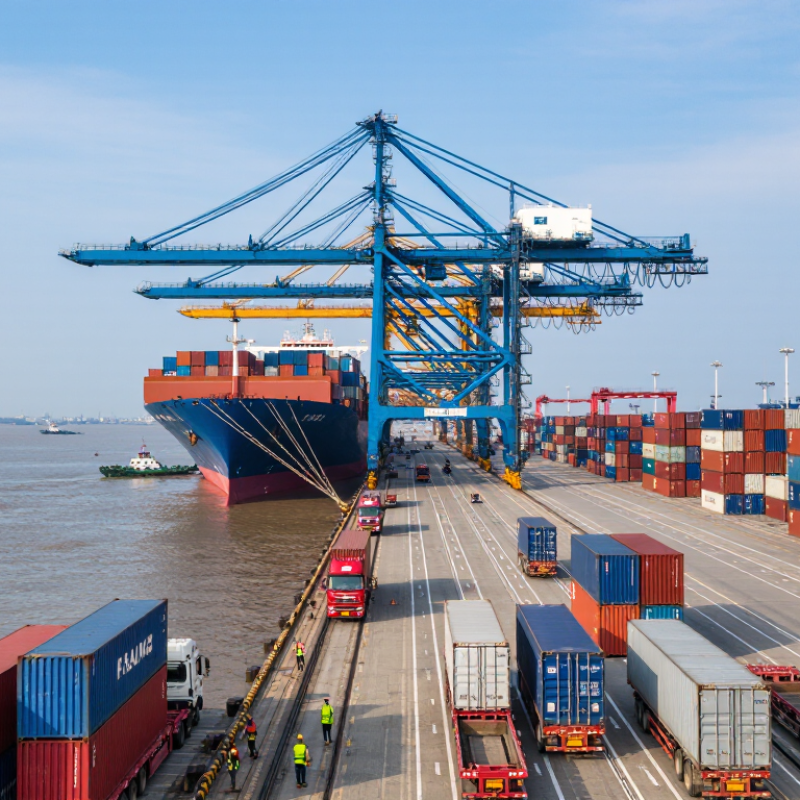
What Bulk Containers Are and How They Work
Bulk containers are large, standardized units designed to move unpackaged goods efficiently across oceans, roads, and railways. They can carry dry materials, powders, grains, or approved liquids. Their rigid frame protects the inner tank, liner, or flexible bag during handling. Forklifts, cranes, and loading systems can move them without repacking the contents at every stage.
The working process is practical but requires discipline. A container is filled within its certified weight and volume limits, then sealed and labeled for transport. Valves, doors, and closures must be checked carefully. During transit, the container may face vibration, temperature changes, and rough transfers between vehicles. In field operations, small inspection errors have caused delays. Bulk containers are not perfect. They depend on correct loading, clean equipment, and accurate documents. That human factor deserves more attention.
Tips: Check the container before filling. Look for cracks, stains, damaged seals, or unusual odors. Confirm the material suits the container’s construction. Leave enough space for expansion when handling liquids. Secure every closure, record the fill weight, and photograph important seals. Keep handling instructions visible. A simple checklist helps, though it should never replace trained inspection.
Why Are Bulk Containers Essential for Global Shipping? – What Bulk Containers Are and How They Work
| Dimension | What It Means | Typical Facts and Data | Why It Matters in Global Shipping |
|---|---|---|---|
| Definition | A bulk container is a reusable or disposable transport unit designed to move unpackaged dry, liquid, or temperature-sensitive cargo. | Cargo is loaded directly into the container, liner, bladder, or rigid vessel rather than being divided into many small retail packages. | It consolidates large cargo volumes into a standardized handling unit. |
| Main cargo categories | Bulk containers are selected according to the physical and regulatory characteristics of the cargo. | Dry powders and granules; agricultural products; food ingredients; non-hazardous liquids; chemicals; and temperature-sensitive liquids. | The correct container helps control contamination, leakage, moisture exposure, and handling risk. |
| Rigid dry bulk container | A strong container used for loose dry cargo such as powders, pellets, and granules. | Commonly built to fit standard intermodal equipment dimensions and loaded through top openings or pneumatic systems. | It supports mechanical transfer between road, rail, and sea transport with limited cargo repacking. |
| Dry bulk liner | A flexible inner liner fitted inside a standard freight container for dry bulk cargo. | Usable capacity depends on the container, cargo density, loading method, and safe weight limits; many applications handle approximately 20–25 cubic metres. | It can convert an existing container into a bulk-loading unit without requiring a dedicated outer vessel. |
| Flexitank | A flexible bladder installed inside a standard freight container for non-hazardous liquids. | Typical working volumes are about 14,000–26,000 litres, subject to container payload, liquid density, route rules, and equipment specifications. | It allows liquid cargo to move in a containerized format without using a rigid liquid tank. |
| Intermediate bulk container | A rigid or composite unit used for medium-volume liquids, powders, or granules. | Common nominal sizes include approximately 600–1,000 litres, depending on the design and cargo. | It provides a practical balance between drums, small packages, and full-container bulk systems. |
| Standard outer dimensions | Many bulk systems use standard intermodal containers as the outer transport unit. | Common container lengths are 20 ft and 40 ft; external dimensions and maximum gross mass vary by equipment type and international route. | Standard dimensions enable transfer among container ships, trucks, rail wagons, ports, and terminals. |
| Loading process | Cargo is introduced through filling ports, top hatches, pumps, or pneumatic equipment. | The container must be inspected, cleaned or prepared, correctly positioned, and loaded within its rated capacity and safe payload. | Controlled loading reduces spillage, air entrapment, uneven weight distribution, and product damage. |
| Discharge process | Cargo is removed at the destination using gravity, pumps, discharge valves, augers, or pneumatic conveying. | Discharge equipment must match cargo viscosity, particle size, flow characteristics, and packaging design. | Efficient discharge reduces manual handling and shortens unloading time. |
| Payload control | The shipment must remain within the permitted gross mass and axle-load limits. | The allowable cargo mass is affected by container tare weight, cargo density, road limits, vessel limits, and terminal requirements. | Volume alone cannot determine the shipment size; dense cargo may reach the weight limit before the container is full. |
| Cargo protection | Bulk systems help isolate cargo from external handling and environmental exposure. | Protection may include sealed closures, moisture barriers, food-contact materials, insulation, or temperature-control equipment, when suitable. | Better containment can reduce contamination, oxidation, moisture uptake, and product loss. |
| Intermodal compatibility | The same loaded unit can move through several transport modes. | Typical transport links include truck-to-rail, rail-to-port, and port-to-vessel movements. | Fewer cargo transfers can improve schedule reliability and reduce handling damage. |
| Handling efficiency | Bulk containers reduce the need to handle many individual bags, drums, or small packages. | Mechanical loading and unloading can replace a substantial amount of manual transfer work, depending on the cargo and facility. | Fewer handling steps may improve throughput, worker safety, and inventory control. |
| Regulatory requirements | Container selection and transport procedures depend on cargo classification and destination rules. | Hazardous materials may require approved packaging, markings, documentation, inspections, and handling procedures under applicable international and national regulations. | Compliance is essential for safe acceptance, customs processing, and lawful transport. |
| Environmental considerations | Bulk systems can reduce secondary packaging and cargo handling, but their environmental performance depends on the complete logistics cycle. | Relevant factors include material consumption, cleaning requirements, return transport, reuse, recycling, leakage prevention, and disposal. | A lifecycle assessment is more reliable than judging sustainability from container type alone. |
| Best-use conditions | Bulk containers are most effective when cargo volumes, loading facilities, and delivery patterns are predictable. | They are particularly suitable for repeated shipments of compatible dry or liquid commodities between facilities equipped for bulk transfer. | Operational compatibility is as important as container capacity when selecting a bulk solution. |
Note: Capacities and permitted payloads are indicative ranges. Actual limits depend on container specifications, cargo density, transport regulations, route requirements, and loading equipment.
Related Posts
-
10 Best Industrial Containers for Efficient Storage Solutions
-
What is Industrial Packaging Equipment and Its Importance in Manufacturing
-
Top 10 Bagging Equipment Suppliers in China for Global Buyers?
-
Revolutionizing E-commerce: How Automated Packaging Enhances Delivery Efficiency and Customer Satisfaction
-

Top 10 Best Industrial Packaging Machines You Should Consider?
-

How to Choose the Best Bagging Machines at the 139th Canton Fair?