NEED HELP FAST? We have over 40 years' experience with Bulk Material Handling, Packaging, and Processing. (979) 217-1480 GET A QUOTE
NEED HELP FAST? (979) 217-1480 GET A QUOTE
Choosing the right bagging systems is less about buying the fastest machine and more about matching equipment to the work on your floor. A line filling 25-pound sacks of grain has different needs from one packing small parts into clear poly bags. Product weight, bag material, fill rate, changeover time, and available space all affect the decision. Small details matter. A narrow conveyor or dusty product can change performance more than a brochure suggests.
For a transparent expert perspective, consider this illustrative quotation from fictional packaging engineer Lena Ortiz: “Choose for the product you run every day, then test the awkward jobs before you commit.” It is a simple rule, but useful. Ask suppliers to demonstrate your actual product and packaging, not just a similar sample. Watch how bags feed, seal, and discharge. Note operator steps, cleaning access, and what happens when a bag sits slightly out of position. Those moments reveal practical costs that a speed rating may hide.
This guide outlines how to compare manual, semi-automatic, and automatic bagging systems against your production goals. It also considers integration, service support, controls, and future capacity. A faster machine is not always a better fit. In some plants, a modest system with quick changeovers may deliver more reliable output. The trade-offs deserve honest review. Requirements can change, and no selection checklist replaces a real production trial.
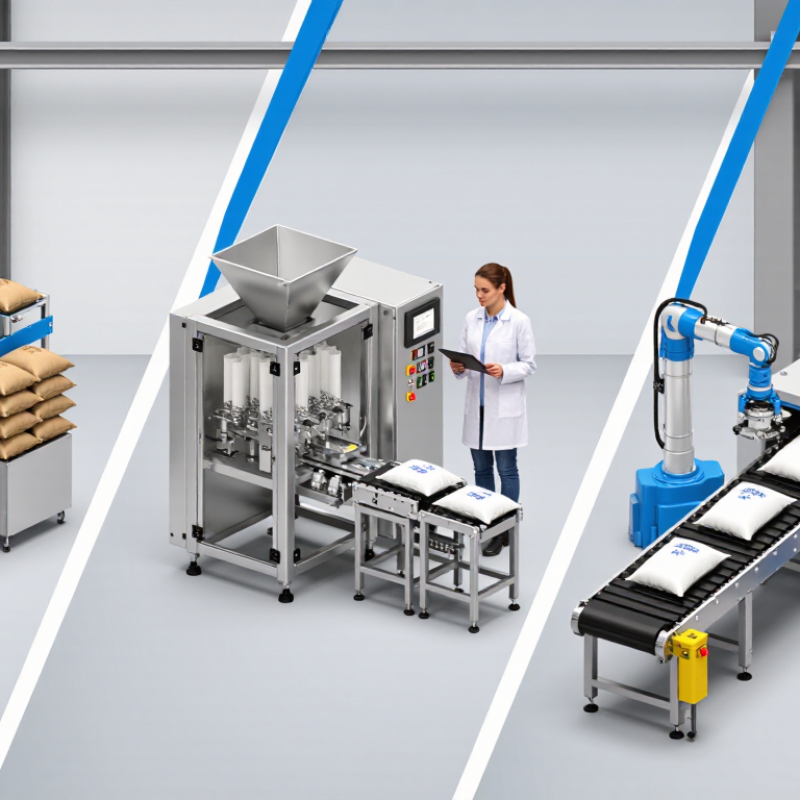
How to Choose the Best Bagging Systems for Your Business?
Understanding Your Business’s Bagging Requirements
Start with the product, not the machine. Record each item’s dimensions, weight, texture, and flow behavior. Fine powders, irregular parts, and sticky foods can require very different feeding and sealing setups. Check the bag materials and sizes you use now, then note any expected changes. A small sample can reveal more than a polished specification sheet.
Measure your real production rate across a normal shift, including pauses and product changeovers. A system that handles peak speed may still struggle with frequent cleaning or adjustments. Consider who will operate it, how much floor space is available, and whether bags need accurate counts or weight checks. I have seen planning focus too heavily on hourly output. That number can miss the daily friction.
Tips: Run trials with your actual product and bags. Watch for spills, uneven fills, slow changeovers, and awkward operator movements. Ask how routine cleaning works, and check which adjustments require tools. Test before buying. Keep a short record of results; one inconvenient detail may matter more than an impressive speed claim.
Bagging systems range from manual stations to fully automated lines. Manual and semi-automatic machines suit smaller runs or frequent product changes. An operator places each bag, while the machine weighs, fills, or seals it. That flexibility has a cost: labor and handling can slow output. Open-mouth systems work well for powders, grains, and granules that pour freely. Valve baggers help contain dusty powders through a small filling port. Less mess, but not a universal fix. Bag material and product flow still matter.
Form-fill-seal machines make bags from roll stock, then fill and close them. They can reduce bag handling, but require space and careful setup. For larger loads, bulk-bag systems lift and fill flexible containers, often with load cells to control weight. PMMI’s 2023 State of the Industry report put U.S. packaging machinery shipments at $10.9 billion in 2022, up 5.8% year over year. That growth reflects investment across packaging, though it does not prove automation pays off for every plant. Compare actual bag sizes, target output, changeover time, and cleaning needs. A few minutes saved per changeover may matter more than top speed. I would also test the real product, not just a sample that pours neatly.
Comparing Capacity, Accuracy, Speed, and Costs
A bagging system should match your actual product flow, not just a peak-capacity figure on a sales sheet. Estimate bags per hour during normal shifts, then check whether the machine can sustain that pace with your product and bag size. A system rated for high output may slow down when operators change rolls or clear jams. Speed isn’t everything.
Accuracy affects both product giveaway and customer confidence. For a 500-gram target, even small variations can add up across hundreds of bags. Ask how the system handles irregular product shapes, and test it using your own materials. Compare weighing results over a realistic run, not just a few samples.
Costs include more than purchase price: account for installation, training, maintenance, energy, and downtime. One estimate may miss something.
Tips: Record your current output, average fill variation, and stoppages before comparing equipment. Request a trial with your typical product and packaging, and note how often adjustments are needed. Check cleaning and changeover times, too. A faster machine may be harder to operate than expected, and projected savings can be optimistic. Recheck the assumptions with the people who will run it each day.
Before comparing bagging systems, map the job they must perform. Record bag width, material, closure type, product weight, and target speed. Then check whether the machine fits the existing conveyor, printer, and control system. A bagger that runs quickly alone may slow the line if operators must reposition cartons by hand. Ask for a trial using your actual bags and products; inspect seal quality, changeover time, and rejected packages. Small mismatch, big headache. Also check access to guards, emergency stops, and routine cleaning points. The U.S. Bureau of Labor Statistics reported 3.3 recordable cases per 100 full-time workers in manufacturing in 2023. That broad figure is not specific to bagging, but it reinforces the value of reviewing hazards before installation.
Support matters after commissioning. Request a written response-time target, clear escalation contacts, and a list of commonly needed spare parts. Ask who trains operators and maintenance staff, and whether training covers jam clearing and safe changeovers. The 2024 Deloitte and Manufacturing Institute report projected that 2.1 million U.S. manufacturing jobs could go unfilled by 2030. That makes straightforward controls and practical training especially important when staffing is tight. Compare warranty terms and service availability across your operating shifts, not just office hours. A detail easy to miss: confirm how software updates affect existing line controls. I would still leave room for a manual check; specifications rarely capture every awkward reach or rushed changeover.
Suggested planning weights for comparing bagging systems—not measured industry statistics. Prioritize compatibility with your product, bag sizes, and production line; then assess operator safety and the availability of maintenance, training, and technical support. Adjust the weights to fit your operation.
Selecting a bagging system starts with the product, not the machine. Record bag dimensions, target weight, product flow, dust levels, and required bags per minute. A free-flowing grain behaves differently from sticky powder or fragile parts. Bring real product samples to supplier trials, and test the actual film or paper you plan to use. Watch the seals, changeover time, and rejected bags. Small details matter.
Match automation to your measured demand. The International Federation of Robotics reported 541,302 industrial robot installations worldwide in 2023, in its World Robotics 2024 report. That figure reflects broad factory investment, not a guarantee that a robotic bagger will pay off for every business. Compare labor savings with equipment, maintenance, utilities, and integration costs. Check whether the system connects reliably to scales, conveyors, labelers, and existing controls. Ask for changeover demonstrations using your own operators. Test it live.
Implementation needs a careful ramp-up. Set acceptance targets for speed, fill accuracy, seal quality, and downtime before installation. Train operators on routine cleaning, jam recovery, and safe adjustments; document who handles each task. PMMI’s packaging automation research highlights integration and workforce capability as practical considerations for automation projects. Build time for commissioning and troubleshooting into the schedule. One detail is easy to miss: packaging materials can behave differently at production speed than in a short demonstration. I would keep some contingency in the plan. A tidy spreadsheet cannot predict every shift.
| System Type | Typical Bag Format | Indicative Throughput | Best Suited For | Staffing and Automation | Key Advantages | Selection Considerations |
|---|---|---|---|---|---|---|
| Manual bagging station | Pre-made bags, sacks, or pouches | Approximately 2–8 bags per minute, depending on fill weight, material, and operator workflow | Small production runs, frequent product changes, pilot operations, and lower-volume businesses | Operator positions, weighs, fills, and closes each bag; low automation | Low initial investment; flexible for different products and bag sizes; simple to operate | Labor cost and output depend heavily on operator availability, ergonomics, and product handling requirements |
| Semi-automatic open-mouth system | Pre-made open-mouth paper, woven, or plastic bags | Approximately 5–15 bags per minute, depending on product flow, bag handling, and closure method | Powders, granules, feed, seed, and other free-flowing products at moderate production volumes | Operator places bags; the machine controls weighing and filling; closure may be manual or automatic | Balances investment and productivity; accommodates a range of fill weights and bag materials | Check dust control, bag presentation, sealing or sewing requirements, and compatibility with product flow |
| Automatic open-mouth system | Pre-made open-mouth bags | Approximately 10–30 bags per minute; actual performance depends on product and line configuration | Established operations requiring consistent output and reduced manual bag handling | Automatic bag feeding and filling; operators typically monitor the line and replenish supplies | Improves repeatability and labor efficiency; can integrate with conveyors, checkweighers, and palletizing | Requires reliable bag supply, suitable floor space, and coordinated downstream equipment |
| Form-fill-seal system | Film formed into bags from a roll, commonly pillow or gusseted formats | Approximately 20–100+ bags per minute, depending on machine design, bag size, and product | High-volume packaging of compatible powders, granules, or other products in flexible film | Automated forming, filling, and sealing; operator oversight and material replenishment are still required | Produces bags from roll stock; supports continuous production and consistent package appearance | Confirm film specifications, sealability, product dust or moisture behavior, and changeover needs |
| Valve bag filling system | Valve bags, commonly paper or woven polypropylene | Approximately 5–20 bags per minute per spout, depending on filling method and product characteristics | Fine powders and dry bulk materials that can be filled through a bag valve | Manual or automatic bag placement; filling may use air, impeller, or gravity-assisted methods | Compact bag closure; can limit product exposure during filling when correctly matched to the material | Validate powder aeration, flowability, dust extraction, valve design, and required bag strength |
| Bulk bag filling system | Flexible intermediate bulk containers (FIBCs), often called bulk bags | Typically measured by bags per hour; cycle time varies substantially with bag capacity and handling | Large-volume shipments of powders, pellets, flakes, or granules, commonly in the 500–2,000 kg range per bag | May include bag suspension, spout connection, weighing, inflation, and conveyor handling | Efficient for bulk quantities; reduces the number of individual packages to handle | Assess load-cell accuracy, safe lifting and support, dust containment, filling height, and transport requirements |
| Implementation checklist: Confirm product flow and dust behavior, target output, bag material and size, fill-weight accuracy, closure method, cleaning and changeover needs, operator training, guarding, dust collection, utility requirements, and integration with conveying and palletizing. Throughput figures are indicative planning ranges, not guaranteed machine ratings; request a product trial and a written performance specification before purchase. | ||||||