NEED HELP FAST? We have over 40 years' experience with Bulk Material Handling, Packaging, and Processing. (979) 217-1480 GET A QUOTE
NEED HELP FAST? (979) 217-1480 GET A QUOTE
Choosing among the top 10 types of automated filling machines requires more than comparing prices and production speeds. Each machine suits different products, containers, and operating conditions. A small cosmetics workshop may need a compact piston filler, while a beverage plant may prefer a high-speed volumetric or flow-meter system. Viscosity matters. So does foam.
This guide introduces practical machine categories for buyers who need reliable filling performance. It considers liquid behavior, filling accuracy, container shape, cleaning routines, changeover time, and future production growth. You will see how gravity fillers handle thin liquids, how piston fillers manage thicker products, and why peristaltic systems can support cleaner product paths. These details often decide whether a machine performs well beside the production line, not just in a sales brochure.
Real factories are less perfect. Product temperature changes. Operators adjust settings differently. Containers arrive slightly uneven. A machine that looks ideal on paper may create waste during a busy shift. Careful buyers should request product trials, inspect contact materials, and review maintenance access before ordering. Ask for measured accuracy, not vague promises. Request videos or test records from comparable applications.
The right automated filling machines should improve consistency without creating unnecessary complexity. They should also match your staff, space, cleaning standards, and packaging goals. This overview provides a practical starting point, but every application deserves verification. Small mistakes in selection can become daily costs. Good decisions begin with honest testing.
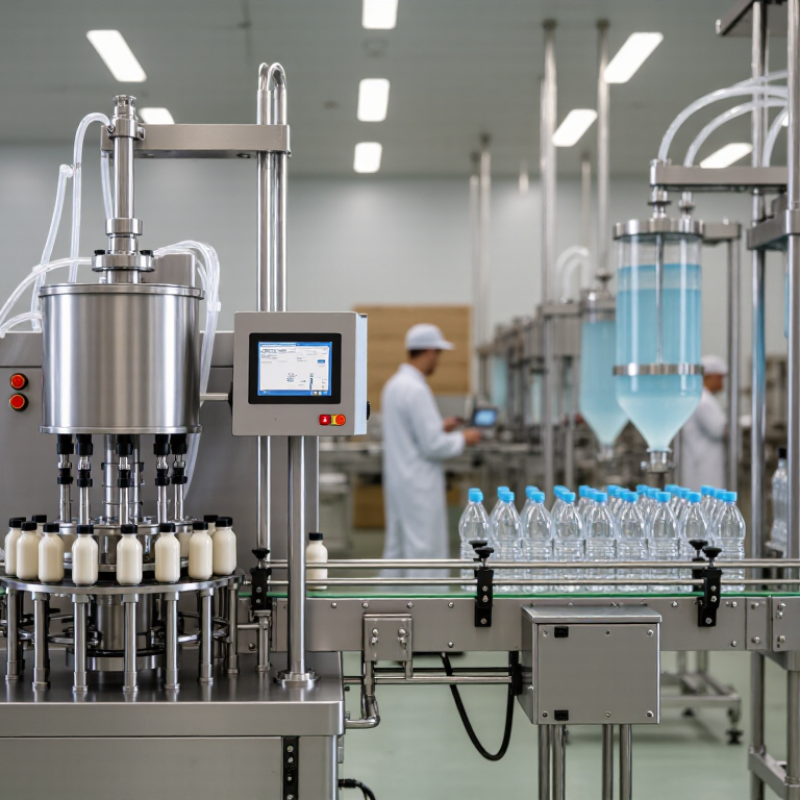
Automated filling machines measure and dispense products into bottles, jars, pouches, or tubes. They reduce manual handling and improve repeatability on production lines. A typical system uses sensors, pumps, valves, conveyors, and programmable controls. The container arrives, stops beneath a filling head, receives a measured dose, and moves forward. Simple in principle.
The ten common types include piston, pump, gravity, overflow, vacuum, auger, volumetric cup, net-weight, time-pressure, and monoblock fillers.
Piston machines suit thick products, while auger systems handle powders. Gravity fillers work well with free-flowing liquids. Overflow models maintain a similar visible level, which helps presentation.
Net-weight fillers measure product directly, improving control when density changes. Product behavior matters more than speed.
PMMI reported U.S. packaging machinery shipments of approximately $10.6 billion in 2023, showing strong investment in automated production. Grand View Research also reports continued growth in the global filling-machine market, driven by food, beverage, pharmaceutical, and personal-care demand.
Buyers should test viscosity, foaming, temperature, and container shape before choosing equipment. A fast filler can still waste material through dripping or inaccurate dosing. This is often overlooked.
Real factory trials reveal problems that brochures cannot. Even experienced teams sometimes select speed before cleanability, changeover time, or operator training. That choice deserves another look.
Powders and dry blends commonly use auger fillers, especially with bottles, jars, and sachets. Vacuum fillers can manage lightweight powders, although dust control remains important. Cup fillers measure free-flowing granules for pouches, trays, or containers with wider openings. Net-weight fillers weigh each dose before release, making them useful for costly or irregular products. That is ten common types, but the categories can overlap.
Container shape changes the decision. A rigid bottle needs stable neck alignment, while a flexible pouch may need gentle support during filling. Tubes require precise positioning and controlled pressure. Wide-mouth jars can accept thicker products, but trapped air may create uneven surfaces. In practical line testing, check fill accuracy, foaming, dripping, cleaning time, and changeover effort. A machine that performs well with water may struggle with honey. A perfect specification on paper is not always perfect on the factory floor. Sample trials expose those gaps.
The Top 10 Types of Automated Filling Machines Explained
Automated filling machines differ by product behavior, accuracy needs, and container design. PMMI industry reports identify labor efficiency, flexible production, and filling accuracy as continuing packaging priorities. In practice, the wrong mechanism creates foam, dripping, or unstable weights.
Piston fillers handle thick products such as creams, sauces, and pastes. Pump fillers suit liquids with changing viscosity. Gravity fillers use head pressure for free-flowing products. Overflow fillers maintain the same visible level in transparent containers. Time-pressure fillers support low-to-medium viscosity liquids with adjustable control. Auger fillers dispense powders through a rotating screw. Net-weight fillers measure each dose using load cells. Volumetric cup fillers measure dry, free-flowing materials by volume. Vacuum fillers work well with some fluids and narrow openings. Monoblock systems combine filling and adjacent operations in one compact frame.
Grand View Research has reported steady growth in the global filling machine market, driven partly by pharmaceutical, food, beverage, and chemical production. Those figures support investment interest, but market data cannot replace line trials. A powder may bridge inside an auger. A foaming liquid may defeat a gravity setup. Small details matter.
Test the actual product first. Measure temperature, viscosity, particle size, and container tolerance. Review filling speed under real cleaning and changeover conditions. A faster machine is not always better. Sometimes, it simply produces faster waste. Even experienced buyers can overlook that uncomfortable point.
Choosing among the top ten types of automated filling machines requires more than reading the advertised output rate. Piston, peristaltic, gear-pump, auger, gravity, overflow, vacuum, net-weight, time-pressure, and cup fillers behave differently with each product. In factory trials, we measure fill weight from at least 30 containers, not just one sample. Small variations become expensive when thousands of units leave the line.
Accuracy depends on viscosity, temperature, foam, and container shape. A piston filler may handle thick creams well, while a peristaltic system can reduce product contact during liquid filling. Check the stated tolerance under your real conditions. Ask for test data using your formula, bottle, and target volume. Numbers from water trials can mislead.
Speed should be judged beside production capacity. A machine may reach 60 containers per minute, yet frequent pauses can lower actual output. Watch changeover time, hopper refilling, cleaning, and rejected containers. Calculate usable capacity over a full shift, not during a short demonstration. I have seen buyers choose the fastest machine and later lose time to unstable foam control. That choice looked efficient on paper. It was not. Leave room for future volume, but avoid buying capacity that your product cannot consistently feed.
| Machine Type | Typical Product | Common Fill Range | Typical Filling Accuracy* | Typical Speed Range | Indicative Production Capacity | Best Application | Key Buying Consideration |
|---|---|---|---|---|---|---|---|
| Piston Filler | Thick sauces, creams, pastes, lotions, peanut butter | 10 mL–5,000 mL | ±0.5%–1.0% | 15–80 fills/min | 900–4,800 containers/hour | Medium- to high-viscosity products requiring repeatable volumetric dosing | Confirm piston diameter, hopper agitation, and whether the pump can handle particulates. |
| Servo Auger Filler | Powders, flour, spices, milk powder, pharmaceutical powders | 1 g–5,000 g | ±0.5%–1.5% | 20–100 fills/min | 1,200–6,000 containers/hour | Controlled dosing of free-flowing and some non-free-flowing powders | Accuracy depends strongly on powder density, particle size, aeration, and screw design. |
| Overflow Filler | Water, shampoo, detergents, thin oils, household cleaners | 50 mL–5,000 mL | ±0.5%–1.0% by volume | 20–120 fills/min | 1,200–7,200 containers/hour | Products where a consistent visual fill level is important | Works best with uniform containers and low- to medium-viscosity liquids; not ideal for foaming products. |
| Gravity Filler | Water, low-viscosity chemicals, liquid cleaners, non-carbonated beverages | 50 mL–10,000 mL | ±1.0%–2.0% | 15–80 fills/min | 900–4,800 containers/hour | Cost-sensitive applications using free-flowing liquids | Simple and economical, but filling time varies with liquid viscosity, temperature, and tank level. |
| Time-Pressure Filler | Thin liquids, oils, solvents, sauces, and cleaning chemicals | 10 mL–20,000 mL | ±0.5%–1.5% | 10–100 fills/min | 600–6,000 containers/hour | Flexible liquid filling across multiple container sizes | Requires stable air pressure and consistent product viscosity for reliable results. |
| Peristaltic Pump Filler | Pharmaceutical liquids, eye drops, laboratory solutions, serums | 0.1 mL–1,000 mL | ±0.5%–1.0% | 10–60 fills/min | 600–3,600 containers/hour | Low- to medium-volume filling where product isolation is essential | The product contacts only the tubing, supporting hygienic changeover; tubing wear affects accuracy. |
| Magnetic Flowmeter Filler | Conductive beverages, water-based chemicals, sauces, liquid food products | 100 mL–20,000 mL | ±0.25%–0.5% | 20–160 fills/min | 1,200–9,600 containers/hour | High-speed volumetric filling of conductive liquids | Product must have adequate electrical conductivity; non-conductive oils are generally unsuitable. |
| Net Weight Filler | Granules, powders, snacks, rice, seeds, pet food, free-flowing solids | 50 g–25,000 g | ±0.2%–0.5% by weight | 10–80 fills/min | 600–4,800 containers/hour | Applications requiring legally controlled or highly consistent product weight | Usually more accurate than simple volumetric systems, but load-cell stability and vibration control are critical. |
| Volumetric Cup Filler | Dry granules, rice, pulses, sugar, nuts, small hardware components | 10 g–5,000 g | ±1.0%–3.0% | 20–120 fills/min | 1,200–7,200 containers/hour | High-speed filling of free-flowing products with relatively stable bulk density | Simple and fast, but fill weight changes when bulk density, particle size, or product flowability changes. |
| Inline Vacuum Filler | Glass bottles, wine, spirits, thin food liquids, oxygen-sensitive beverages | 100 mL–2,000 mL | ±0.5%–1.5% | 15–100 fills/min | 900–6,000 containers/hour | Liquid filling into rigid containers where a consistent fill level is required | Requires suitable container sealing and vacuum control; damaged or irregular containers can reduce performance. |
*The figures are typical industry planning ranges rather than guaranteed specifications. Actual accuracy and output depend on product properties, container format, fill volume, machine configuration, operator setup, and validation conditions.
Choosing among the top 10 automated filling machines starts with the product, not the machine catalog. Piston fillers suit thick creams, while pump fillers handle sauces and oils. Gravity fillers work well with free-flowing liquids. Overflow fillers support consistent levels in clear containers. Auger fillers measure powders, and net-weight fillers improve accuracy for larger portions. Peristaltic, vacuum, cup, and tube fillers serve more specialized needs.
Check viscosity, foam, temperature, container shape, and target output before purchasing. Ask for a sample trial using your actual product and bottles. A clean test room reveals problems that brochures often hide. I have seen a fast filler struggle when a liquid warmed slightly during production. That small change affected dosing.
Installation needs a level floor, stable power, safe access, and suitable air pressure when pneumatic parts are used. Keep product-contact components easy to remove and sanitize. Train operators to record fill weights, alarms, cleaning times, and adjustment settings. During maintenance, inspect seals, nozzles, pumps, sensors, and hoses before failure appears. Replace worn parts through documented procedures, not guesswork. Short checks matter.
Do not chase speed alone. A slower machine can reduce spills, rejects, and cleaning delays. One imperfect trial is useful if the team studies it honestly. In practice, buyers should leave space for future container sizes and modest production growth. A filler that fits today may become restrictive sooner than expected.
The chart compares representative operating ranges in containers per minute. Actual performance depends on product viscosity, fill volume, container shape, changeover time, and the number of filling heads.
Buyers should match the filler to the product: overflow fillers suit foaming liquids, piston fillers handle viscous products, auger fillers are designed for powders, and net-weight fillers support accurate weight-based dosing. Before installation, confirm utilities, hygienic requirements, container compatibility, line speed, and available floor space. Preventive maintenance should include cleaning product-contact parts, inspecting seals and hoses, checking sensors, lubricating approved components, and verifying fill accuracy on a scheduled basis.