NEED HELP FAST? We have over 40 years' experience with Bulk Material Handling, Packaging, and Processing.   (979) 217-1480 GET A QUOTE

NEED HELP FAST?   (979) 217-1480   GET A QUOTE

What Are the Top Types of Bagging Systems in 2026?

In 2026, choosing among bagging systems is less about chasing the fastest machine and more about matching the equipment to the product. A fine powder may need a valve-bag filler that controls dust. Granules or pellets may suit an open-mouth system with a sturdy bag clamp and a reliable scale. For high-volume operations, form-fill-seal equipment can create bags from roll stock and fill them in one continuous line. Each option has trade-offs.

Packaging educator Walter Soroka’s broader principles offer a useful guide: “Match the package to the product, process, and protection needed.” This is an editorial paraphrase, not a verbatim quotation. It points buyers toward practical details: bag material, target weight, sealing method, floor space, and the time operators need for changeovers. Small details matter. A narrow hopper can slow a line; a poorly placed control panel can make routine adjustments awkward.

This guide compares common bagging systems, from semi-automatic fillers to integrated high-speed lines. It also considers bulk bag systems for larger loads and the products they handle well. There is no universal winner. Even a technically impressive machine may be a poor fit if cleaning takes too long or bag sizes change often. That deserves a closer look. The best choice depends on real production conditions, not just a brochure’s ideal speed.
What Are the Top Types of Bagging Systems in 2026?

Open-Mouth Bagging Systems for Pre-Made Bags

Open-mouth bagging systems fill pre-made bags through a wide, accessible opening. They suit products that flow unevenly or need careful handling, including grains, powders, pellets, and some food ingredients. An operator places each bag on a filling spout or clamp, and the machine doses material by weight or volume. The setup is easy to understand. But bag placement still matters.

After filling, the system may settle the contents before closing the bag with stitching, heat sealing, or another compatible method. A stable clamp and adjustable fill speed can reduce spills and dusty edges. For fine powders, extraction near the filling point can improve housekeeping and help protect weighing accuracy. Bag material, mouth size, and product behavior should be tested together; a neat sample run does not guarantee similar results at full speed.

These systems offer flexibility, since changing bag sizes can be simpler than changing a complete form-fill-seal setup. Yet manual loading can limit throughput, and awkward bags may tire operators during a long shift. Not every product behaves as expected. Before choosing a system, measure target output, check closure quality, and run trials with actual bags and product. Small wrinkles can become recurring stoppages.

Valve Bagging Systems for Powders and Granules

What Are the Top Types of Bagging Systems in 2026?

Valve Bagging Systems for Powders and Granules

Valve bagging systems suit dry materials that need clean, controlled filling. The bag’s small valve opening helps contain product and reduces spillage during changeovers. Common designs include impeller fillers for free-flowing granules, air packers for fine powders, and auger fillers for cohesive blends. Each handles material differently. A powder that bridges in the hopper may fill unevenly, even with a well-calibrated machine.

Grand View Research estimated the global packaging machinery market at about USD 45.9 billion in 2023, with projected annual growth of 4.7% through 2030. This broad market figure is not specific to valve baggers, but it reflects sustained investment in packaging equipment. For plant operators, the useful question is whether the filler matches the product: particle size, bulk density, aeration, and moisture can all affect bag weight and filling speed.

Look closely at the bag clamp, dust hood, and weighing method. Load-cell feedback can help control target weight, while suitable venting prevents trapped air from making bags bulge. Dust control matters. Fine material may escape around the valve if the nozzle seal or extraction setup is poor. Test with the actual product, not just a similar sample. That step takes time, but skipping it can expose problems only after installation.

Form-Fill-Seal Systems for Integrated Packaging

Form-fill-seal (FFS) systems combine bag forming, product filling, and sealing on one packaging line. In 2026, they remain useful for operations seeking consistent packs with fewer product transfers. A vertical system pulls film from a roll, forms a tube, doses product, and seals each pouch with heated jaws. Horizontal systems create pockets for products placed into them, such as bars or small components. Match the format to product shape, dose accuracy, line speed, and floor space—not just a supplier’s maximum speed claim.

Integration can reduce manual handling, but it depends on how well the feeder, film, and sealing process work together. Powder may need dust control around the seal area; fragile pieces may need gentler feeding. Check changeover time, cleaning access, and date-code placement before selecting equipment. A short trial with your actual product and packaging film can reveal issues that a specification sheet misses. I would not treat that trial as optional, even when the setup looks straightforward. Small details matter.

Tips: Keep a sample pouch from each test run. Check seal consistency, fill weight, and code readability. If seals vary, review temperature, pressure, and dwell time before increasing line speed. Keep it simple.

Bulk Bagging Systems for High-Volume Loads

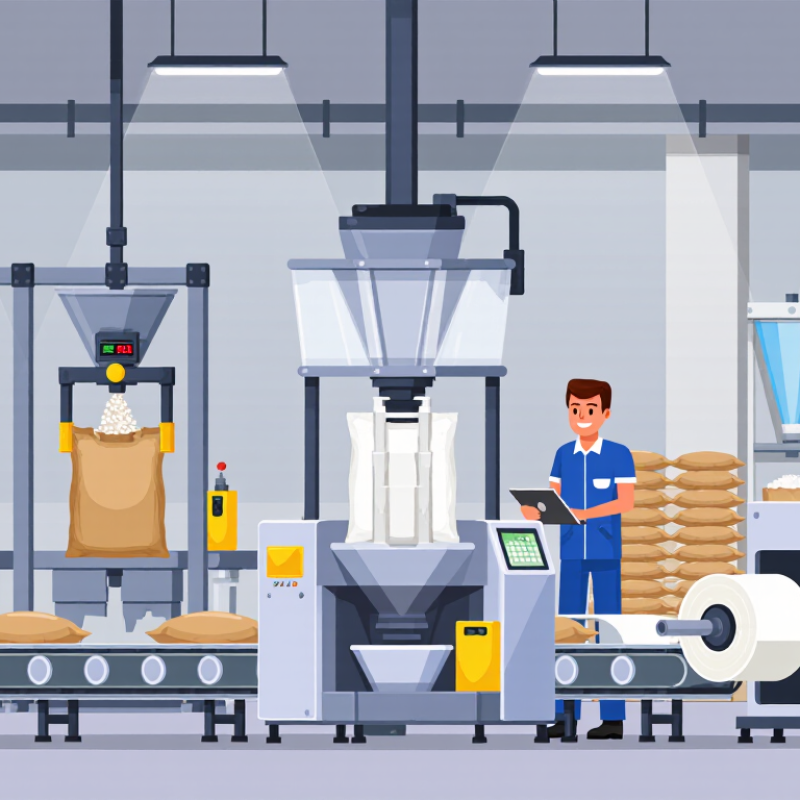
Bulk bagging systems are designed to fill large flexible containers efficiently, often with loads weighing hundreds or thousands of kilograms. For high-volume operations, the right setup depends on material flow, target weight, and how bags move through the facility. A gravimetric system uses load cells to monitor filling weight, while controlled feeding helps reduce overfilling and product loss. For free-flowing granules, gravity-fed equipment may be suitable; powders often need enclosed filling points and dust collection.

A reliable station typically includes a bag-support frame, adjustable spout clamp, weighing platform, and controls for slow final filling. Conveyors or pallet-handling equipment can keep filled bags moving without repeated manual lifting. Check that the frame matches the intended load and that the floor can support the combined weight. In practice, teams sometimes focus on filling speed and overlook bag positioning. That small delay can limit the whole line. Dust control matters, too.

Tips: Test the system with the actual material before setting production targets. Check how humidity, particle size, and flow changes affect fill accuracy. Keep a clear space around the station for inspections and bag changes. Faster is not always better; unstable loads or frequent adjustments can erase the gain. Some setups need more tuning than expected.

Wicketed Bagging Systems for Small, Lightweight Products

Wicketed Bagging Systems for Small, Lightweight Products

Wicketed bagging systems suit products that are light, compact, and easy to place into an open bag. Bags are stacked on a metal or plastic wicket, keeping each opening ready for loading. Depending on the machine and product, an operator or automated loader can insert items before the bag is sealed. This setup is common for small apparel, baked goods, and lightweight components. It can support steady output without requiring a large footprint. That matters in crowded work areas.

Tips: Match bag size to the product, with enough room for smooth loading but not so much excess film that bags bunch. Test the actual product, not just a sample of its dimensions. A soft item may fold or catch differently. Check wicket spacing and sealing temperature during a production trial.

The system is not automatically the best choice for every small product. Irregular shapes can snag at the opening, and very fragile items may need gentler handling or added protection. Operators should watch for uneven loading and weak seals, especially when changing bag materials. In practice, small adjustments can take time. A short trial run helps reveal those issues before full production.

What Are the Top Types of Bagging Systems in 2026? - Wicketed Bagging Systems for Small, Lightweight Products
System Type Typical Operating Method Best Suited Products Key Advantages Important Considerations Common Integration Options
Manual Wicket Bag Dispenser An operator removes a wicketed bag, opens it, loads the product, and closes or seals it as required. Low-volume runs, sampling, replacement parts, and products with frequent size changes. Simple operation, low equipment complexity, and flexibility for short production runs. Output depends on operator speed and consistency. It generally requires more direct labor than automated systems. Worktables, manual impulse sealers, and basic product-counting procedures.
Semi-Automatic Wicketed Bagger The machine presents and opens each bag; an operator places the product into it. The machine may then seal or discharge the filled bag. Small or medium production runs and products that are easy to handle but not practical to feed automatically. Reduces bag-handling steps while retaining operator control over product placement and inspection. Loading remains manual, so labor requirements and throughput are influenced by product presentation and operator pace. Manual loading stations, foot pedals or two-hand controls, and optional print or label equipment.
Automatic Intermittent-Motion Wicketed Bagger The machine indexes bags from a wicket stack, opens a bag, receives a product or batch, and advances through the cycle in steps. Small, lightweight items that can be delivered in a controlled position or count, such as components, accessories, and selected bakery or produce items. Automates repeatable bag presentation and can coordinate with upstream feeding or counting equipment. Product size, bag dimensions, film properties, and loading method affect achievable output. Changeovers and setup should be assessed for the intended product range. Conveyors, counters, pick-and-place equipment, checkweighers, and downstream case packing.
Automatic Continuous-Motion Wicketed Bagger Bag handling and product loading are coordinated with continuous machine motion rather than stopping for every cycle. Suitable, consistently presented products on production lines designed for sustained operation. Can support a continuous process when product feeding, bag presentation, and sealing are properly synchronized. Requires compatible product flow and careful line integration. Not every product or wicketed-bag specification is suitable for continuous motion. Continuous conveyors, synchronized feeders, automated inspection, and coordinated discharge systems.
Wicketed Bagger with Counting or Weighing Feed A bagger is paired with a counter or scale that prepares a set quantity or target weight before loading. Small parts supplied in counted groups, or lightweight products sold by a target weight. Can improve portion consistency and reduce manual counting or weighing when products feed reliably. Counting accuracy depends on product shape and separation; weighing accuracy depends on the scale, target weight, and product handling conditions. Vibratory or belt feeders, counting systems, scales, and reject or verification stations.
Wicketed Bagger with Robotic or Pick-and-Place Loading A robot or automated handling device places products into bags presented by the bagger. Products with repeatable dimensions and presentation that can be reliably picked, grouped, or oriented. May reduce repetitive manual loading and support consistent placement in a suitably engineered cell. Product variation, gripping needs, cycle time, guarding, and changeover requirements must be evaluated for each application. Vision systems, robotic cells, conveyors, safety guarding, and automated product inspection.