NEED HELP FAST? We have over 40 years' experience with Bulk Material Handling, Packaging, and Processing. (979) 217-1480 GET A QUOTE
NEED HELP FAST? (979) 217-1480 GET A QUOTE

Industrial food packaging machines are engineered systems that prepare, fill, seal, label, and protect food products. They work with products ranging from liquid sauces to frozen vegetables and baked goods. A typical line may include a conveyor, multihead weigher, filling unit, sealing station, metal detector, and case packer. Each component has a specific role. Together, they create a controlled packaging process.
Their value extends beyond speed. Proper machines help maintain portion accuracy, product freshness, package integrity, and production consistency. For example, a vertical form-fill-seal machine can create pouches, measure food, and close each package within seconds. Vacuum packaging equipment removes air from selected products, while labeling systems support clear identification and traceability. Operators still need to check temperatures, seal strength, film alignment, and cleaning records. Automation does not remove responsibility.
No machine fits every factory.
Choosing suitable industrial food packaging machines requires practical evaluation. Product texture, package material, hygiene requirements, available floor space, and expected output all matter. Experienced engineers often review samples before recommending a system. A machine may perform well during a demonstration but behave differently with sticky fillings or irregular pieces. That limitation deserves honest attention. Regular maintenance, calibration, staff training, and documented inspections also influence results. This guide explains the main machine types, their working principles, and the decisions that affect reliable food packaging operations.
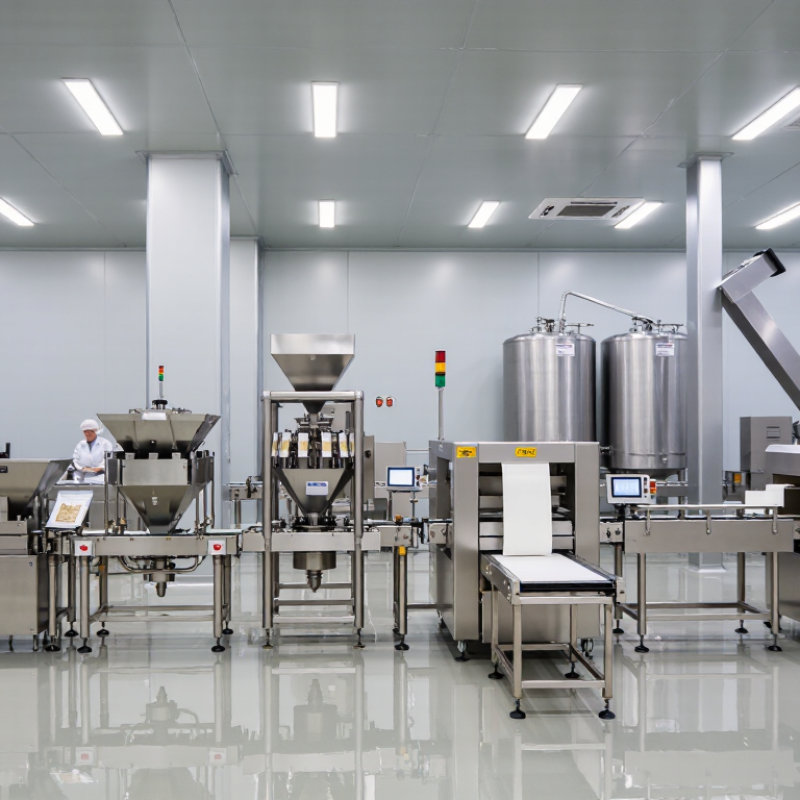
Industrial food packaging machines are automated systems that prepare, fill, seal, label, or inspect food products at commercial scale. Their purpose is more than faster production. They help control portion sizes, reduce handling, protect food from moisture and oxygen, and create consistent packs. Depending on the product, equipment may handle powders, liquids, frozen items, baked goods, or fresh produce. A machine can form a pouch, measure ingredients, seal film, and check the finished package within seconds. In a working facility, this consistency supports traceability and safer routine operations.
In practice, packaging engineers evaluate product texture, filling accuracy, cleaning access, seal strength, and production speed. They also review changeover time and the packaging material’s barrier performance. These details matter when a line switches from dry snacks to sticky sauces. Good equipment supports hygiene programs, but it cannot replace trained workers or careful quality checks. Automation is not a magic shield. A poorly adjusted sealing jaw can leave weak edges, wasted product, or unclear date marks. Reliable performance depends on maintenance, testing, and sensible operating procedures.
Tips: Define the product and target output before comparing machines. Request trials with the actual food and packaging film. Measure fill accuracy, seal quality, cleaning time, noise, and operator workload. Leave room for change. A machine that fits today may limit tomorrow’s production. Keep inspection records, even when results look normal. This small habit can reveal gradual wear before it causes larger problems.
Industrial food packaging machines automate filling, sealing, wrapping, labeling, and handling. They protect food from moisture, oxygen, contamination, and physical damage. The right machine depends on product texture, package material, speed, and hygiene requirements.
Vertical form-fill-seal machines create bags from a film roll, then measure and pack snacks, grains, or frozen vegetables. Horizontal form-fill-seal machines wrap solid products, such as biscuits or snack bars. Thermoforming machines heat plastic sheets and shape them around prepared foods. Tray sealing machines close preformed trays with a tight film, often for fresh meat or ready meals. Vacuum packaging machines remove air before sealing, which can help maintain quality. Case packers place finished packages into shipping cartons.
Each type has limits. A fast machine may waste more film during setup. A compact line may struggle with irregular products. These trade-offs need real production trials, not only catalog comparisons. Operators should also check cleanability, seal temperature control, changeover time, and access to replacement parts. Hygienic design matters greatly where food residue can collect.
Tips: Test the actual product before purchase. Measure seal strength and package leakage. Keep a record of cleaning time and rejected packs. Small details, such as powder dust or sharp bones, can change machine performance. Do not ignore operator feedback; they often notice problems first.
Industrial food packaging machines turn loose products into measured, sealed, traceable units. Their operation begins with product feeding. Conveyors, hoppers, or pumps move food toward a dosing station. Sensors monitor position, weight, temperature, and film alignment. The control system compares readings with preset limits. Small errors can stop the line. Good operators watch the data, not only the finished packs.
At the dosing stage, augers, multihead weighers, or liquid fillers deliver controlled portions. The product then enters formed bags, trays, cartons, or pouches. A sealing jaw applies heat and pressure for a measured dwell time. Some systems use vacuum or modified-atmosphere flushing before sealing. This can reduce oxygen around suitable foods and support consistent quality. Metal detection, checkweighing, and vision inspection may follow the seal. Each checkpoint rejects packs that fail defined criteria.
In real production, operation is rarely perfectly automatic. Sticky sauce may slow a pump. Uneven pieces can disturb weighing. Film tension may drift during a long shift. Technicians adjust speed, temperature, pressure, and timing within validated limits. Cleaning and changeover checks protect hygiene between products. Records help trace a sealing fault to a setting or worn component. Fast output can hide small defects, so review still matters. A practical line needs skilled judgment, not blind trust in automation.
Industrial food packaging machines combine several coordinated components to protect products and maintain production speed. A product hopper stores food before measured filling begins. Sensors check product level, film position, and container presence. The control system links these signals with motors, valves, and sealing jaws.
The packaging process usually starts with forming or positioning the container. A dosing unit then delivers a controlled amount of food into each package. Accuracy matters, especially with powders, grains, sauces, and fresh portions. Too little product creates waste and customer complaints. Too much product raises material costs. The sealing unit applies heat, pressure, or both, depending on the packaging material. A date coder can add production information, while a metal detector or checkweigher supports quality control.
Conveyors move packages between these stages at a steady pace. Protective guards reduce contact with moving parts, and emergency stops allow rapid shutdowns. Operators should inspect seal temperature, film tension, and filling accuracy during each shift. Small changes can cause leaking packages or uneven weights. Cleaning is also essential because food residue may collect around nozzles, belts, and sealing areas. In practice, machines rarely run perfectly without adjustment. Humidity, product texture, and film quality can change performance. That detail is easy to underestimate. Reliable operation depends on documented checks, trained operators, suitable materials, and maintenance based on real production conditions.
| Packaging Machine or Component | Primary Function | Typical Packaging Process | Common Food Applications | Typical Technical Characteristics | Important Operating Considerations |
|---|---|---|---|---|---|
| Product Feeder and Conveyor | Moves and distributes products at a controlled rate into the packaging machine. | Product infeed, transfer, accumulation, and synchronization. | Baked goods, snack foods, frozen products, fresh produce, and packaged ingredients. | Modular belt or vibratory systems; variable-speed drives; food-contact surfaces commonly made from stainless steel or approved polymers. | Conveyor speed must match the filler, wrapper, or sealing unit to reduce product collisions, gaps, and line stoppages. |
| Multihead Weigher | Combines portions from several weighing heads to achieve a target fill weight. | Weighing, computerized combination selection, and discharge into bags or containers. | Nuts, confectionery, chips, frozen vegetables, dried fruit, and other free-flowing foods. | Multiple independent weigh buckets; load cells; programmable target weights; high-speed combination calculation. | Product shape, density, stickiness, and vibration can affect accuracy and throughput. |
| Volumetric or Auger Filler | Dispenses a measured volume or controlled screw rotation of product into a package. | Volumetric dosing, auger dosing, or time-based filling. | Flour, sugar, spices, coffee, powders, grains, and small granules. | Stainless-steel dosing parts; adjustable fill volume; optional dust-control systems; suitable for dry products. | Bulk density and powder flowability should be monitored because they influence fill consistency. |
| Liquid and Paste Filler | Meters and fills liquids or semi-liquid foods into bottles, jars, cups, or pouches. | Pump filling, piston filling, gravity filling, or time-pressure filling. | Sauces, dressings, oils, dairy products, beverages, jams, and prepared foods. | Product-contact piping; adjustable fill volume; cleanable valves; optional heated or hygienic filling systems. | Viscosity, temperature, particulates, foaming, and sanitary drainability affect performance. |
| Form-Fill-Seal Machine | Forms packaging material, fills the product, and seals the package in one integrated cycle. | Film unwinding, bag forming, product filling, longitudinal sealing, and end sealing. | Snacks, powders, grains, frozen foods, fresh produce, and ready-to-eat products. | Horizontal or vertical configuration; heat-sealable flexible films; programmable sealing temperature and dwell time. | Film structure, seal contamination, registration accuracy, and product drop height must be controlled. |
| Tray Sealer | Seals a flexible lidding film to preformed trays or containers. | Tray loading, optional gas flushing, lidding, heat sealing, and film cutting. | Fresh meat, seafood, prepared meals, bakery products, and cut produce. | Controlled sealing plate or tooling; optional modified-atmosphere packaging; interchangeable formats. | Tray cleanliness, film compatibility, seal pressure, and gas composition are important for package integrity and shelf life. |
| Vacuum Packaging Machine | Removes air from a package before sealing to limit oxygen exposure. | Bag loading, vacuum evacuation, heat sealing, and atmospheric restoration. | Meat, cheese, coffee, seafood, and products sensitive to oxidation. | Vacuum chamber or nozzle system; adjustable vacuum level; heated sealing bars; programmable cycle controls. | Package material, product temperature, residual air, and seal quality influence protection and storage performance. |
| Modified-Atmosphere Packaging System | Replaces or modifies the air inside a package with a controlled gas mixture. | Air evacuation or gas displacement, gas flushing, sealing, and leak verification. | Fresh meat, poultry, seafood, bakery foods, fresh produce, and ready meals. | Gas dosing and mixing controls; compatible barrier films; optional residual-oxygen monitoring. | Gas ratio, film oxygen transmission, product respiration, temperature, and package leakage must be managed together. |
| Capping and Closing Unit | Applies and tightens closures to bottles, jars, tubs, or other rigid containers. | Cap feeding, placement, torque application, and closure inspection. | Beverages, sauces, dairy products, oils, condiments, and liquid foods. | Cap sorting and feeding; adjustable torque; container and closure change parts. | Insufficient torque can cause leakage, while excessive torque may damage closures or make opening difficult. |
| Labeling and Coding System | Applies labels and prints variable information such as dates, lot numbers, and barcodes. | Label dispensing, product detection, inkjet or laser coding, and code verification. | Nearly all packaged foods requiring identification and traceability information. | Sensors, printheads, barcode readers, adjustable label applicators, and programmable data interfaces. | Correct data, print contrast, label adhesion, and accurate product-to-code matching are essential for traceability. |
| Metal Detector and Checkweigher | Detects metal contamination and verifies package weight before products leave the line. | In-line inspection, automatic rejection of nonconforming packages, and record keeping. | Packaged meat, bakery products, snacks, frozen foods, and dry ingredients. | Conveyor integration; programmable weight limits; sensitivity settings; reject confirmation options. | Product effect, package type, line speed, calibration, and routine performance testing affect inspection reliability. |
| Case Packing and Cartoning Machine | Groups primary packages into cartons or shipping cases for handling and distribution. | Carton forming, product loading, case packing, flap closing, and adhesive or tape sealing. | Cans, pouches, cartons, bottles, trays, and multipack food products. | Robotic or mechanical loading; adjustable pack patterns; carton or case sealing modules. | Package dimensions, case strength, product orientation, and changeover time influence overall efficiency. |
| Palletizing and Stretch-Wrapping System | Arranges cases on pallets and stabilizes the completed load for storage or transport. | Case conveying, layer forming, pallet loading, stretch wrapping, and load discharge. | Cartoned and cased food products across manufacturing and distribution operations. | Robotic or conventional palletizing; programmable layer patterns; adjustable film tension and wrapping cycles. | Load stability, pallet quality, case compression strength, and film containment affect transport safety. |
Industrial food packaging machines fill, seal, label, wrap, or inspect products at production scale. Selection should begin with the food, package material, target weight, and cleaning method. Speed comes later. PMMI’s 2023 State of the Industry report placed U.S. packaging machinery shipments above $10 billion in 2022, showing how strongly manufacturers invest in automated capacity. Yet a fast machine may create waste when film tension, product moisture, or changeover time is poorly matched. Ask for test runs using real ingredients and actual packaging materials.
Maintenance must be measurable, not occasional. Operators should inspect seals, belts, sensors, guarding, and air lines at each shift. Record temperatures, vibration, rejected packs, and unplanned stops. The U.S. Department of Energy’s Operations and Maintenance Best Practices report estimates that predictive maintenance can reduce maintenance costs by 25–30% and breakdowns by 70–75%. Those figures are useful, but not automatic. A neglected sensor can still defeat an expensive monitoring system. Cleaning schedules also need validation, especially around powder, oil, and moisture.
Safety depends on disciplined routines. Lockout/tagout must isolate electrical, pneumatic, hydraulic, and stored mechanical energy before servicing. The U.S. Bureau of Labor Statistics reported 2.6 million nonfatal workplace injuries and illnesses in private industry during 2023. Packaging lines are not harmless because they look clean. Train workers on guarded pinch points, emergency stops, knife changes, and restart procedures. Keep hands out. A rushed adjustment can bypass protection. That mistake deserves review, not concealment. Safety checks should be practical, documented, and repeated after every major change.