NEED HELP FAST? We have over 40 years' experience with Bulk Material Handling, Packaging, and Processing.   (979) 217-1480 GET A QUOTE

NEED HELP FAST?   (979) 217-1480   GET A QUOTE

Why Are Packaging Bags Important for Your Business?

Packaging bags do more than carry a product from a shop to a customer’s home. They protect items, support clear product presentation, and give customers a practical way to handle their purchases. A sturdy bag with a comfortable handle can make a heavy grocery order easier to carry. A clean, well-fitted pouch can help keep small goods organized. Small detail. Real impact.

For businesses, the right packaging bags can also make branding more consistent. A logo, readable colors, and a tidy finish help customers recognize a business again. Yet appearance is only part of the decision. Size, material, strength, storage space, and cost all matter. A bag that is too large may waste material; one that is too weak can fail during ordinary use. These are practical issues, not glamorous ones, but customers notice when packaging creates hassle.

There is no single bag that suits every product or business. A bakery, clothing store, and online retailer have different needs, so choices should reflect the item’s weight, shape, and delivery conditions. Businesses should also check supplier specifications and test samples before placing large orders. A short trial can reveal problems that look minor on a product sheet. Thoughtful packaging can support a better customer experience, but it cannot fix poor service or an unsuitable product. That is worth remembering. This article explores why packaging bags matter and how to choose them with care.
Why Are Packaging Bags Important for Your Business?

What Packaging Bags Are and How Businesses Use Them

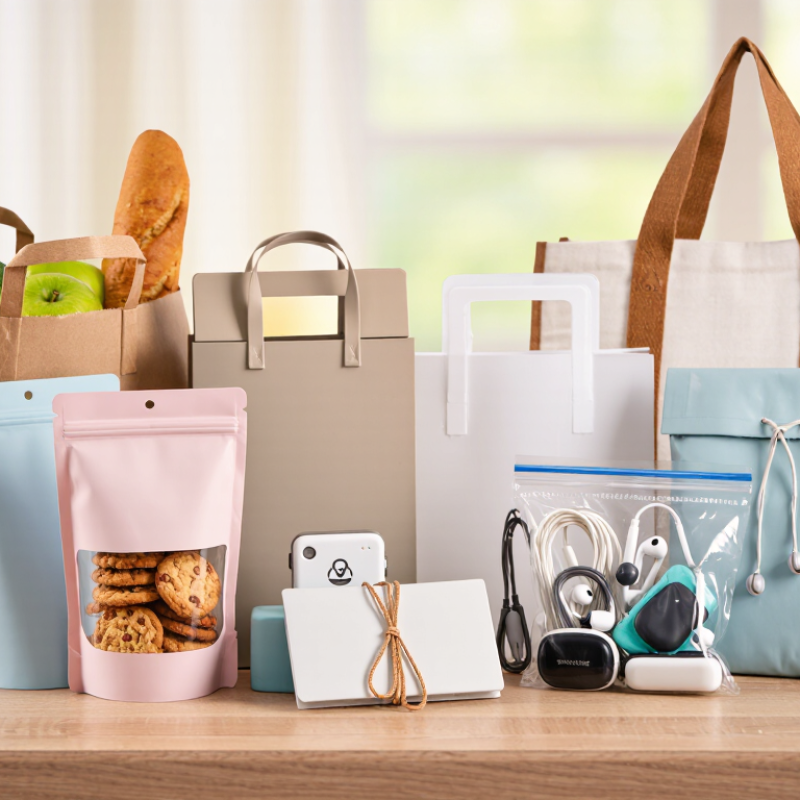
Packaging bags are flexible containers made from materials such as paper, plastic, or layered films. Businesses use them to hold, protect, store, and carry products. A bakery may pack rolls in paper bags, while a clothing shop may use handled bags for purchases. Small details matter. The right bag can make a product easier to transport and keep dust or light moisture away. It cannot protect every product from every condition, though.

Choosing a bag starts with the item itself. Consider its weight, shape, surface, and how customers will handle it. A loose-fitting bag may let fragile items shift; a tight one can be awkward to open. Closures, handles, thickness, and print space also affect daily use. For example, a shop packing small jars might test whether the bag stays upright and whether the handles feel secure when full. It is easy to expect one bag to solve every packaging problem. That expectation deserves a second look: storage, packing methods, and delivery conditions matter too.

Tips: Test a few filled bags before placing a large order. Check the seal, handle strength, and fit. Ask suppliers for material details, and compare samples in real working conditions.

How Packaging Bags Protect Products During Storage and Transport

Packaging bags form a practical barrier between products and the rough conditions of storage and delivery. A suitable bag can keep out dust, splashes, and handling residue while helping limit moisture exposure. For powders, a well-sealed seam helps prevent leaks. For fresh produce, carefully chosen perforations can allow airflow and reduce trapped condensation. Small details matter. Film thickness, closure quality, and bag dimensions all affect how well contents withstand stacking and repeated handling.

Transport brings vibration, impacts, and pressure from neighboring cartons. A bag that fits securely inside its outer package is less likely to shift, rub, or split at the corners. The Food and Agriculture Organization’s 2019 report, The State of Food and Agriculture, estimated that about 14% of food is lost between post-harvest and retail. That figure has many causes; packaging alone cannot prevent those losses. Still, a torn bag or failed seal can turn a manageable handling issue into damaged stock. Not every bag works. Check seams after filling, test closures under realistic stacking conditions, and inspect bags after a sample delivery. A little extra testing can reveal weak points before routine shipments begin.

Why Are Packaging Bags Important for Your Business? — How Packaging Bags Protect Products During Storage and Transport
Packaging Bag Type Common Material Protection During Storage Protection During Transport Typical Products Important Selection Consideration
Woven bag Woven polypropylene or woven polyethylene Helps contain bulk goods and reduces exposure to dust when properly closed. A liner can provide an additional moisture barrier. Woven construction offers useful resistance to tearing and handling stress; performance depends on fabric weight, seams, and closure. Grain, animal feed, fertilizer, and other dry bulk goods Check load weight, seam strength, closure method, and whether a liner is needed.
Flexible intermediate bulk container (FIBC) Woven polypropylene fabric, sometimes with a liner Suitable for storing and handling large quantities of dry materials when selected and used according to its rated capacity. Lifting loops support movement by suitable equipment; the bag must be used within its safe working load and handling instructions. Resins, minerals, agricultural materials, and industrial powders Confirm rated capacity, lifting method, filling and discharge features, and whether the contents require a liner.
Stand-up pouch Flexible multilayer film, often with a resealable closure Barrier performance varies by film structure; selected structures can help limit moisture, oxygen, or light exposure. Flexible packaging uses space efficiently, while the pouch structure and seal help contain the product during routine handling. Snacks, dried foods, pet treats, and powdered products Choose barrier properties and seal design based on the product’s sensitivity and expected storage conditions.
Vacuum bag Multilayer barrier film Removing air can reduce oxygen exposure inside the sealed pack; it does not replace appropriate temperature control or food-safety practices. A sound seal helps prevent leakage and limits air re-entry, provided the film is compatible with the product and handling conditions. Meat, cheese, coffee, and selected industrial components Assess puncture risk, seal integrity, required barrier level, and any refrigeration or freezing requirements.
Paper bag Kraft paper, sometimes with a coating or liner Contains dry products and helps keep out dust when closed; uncoated paper can absorb moisture. Multiple plies and reinforced seams can improve handling strength, but paper may weaken if it becomes wet. Flour, cement, dry chemicals, and retail goods Consider product weight, humidity exposure, paper ply, and whether a moisture-resistant liner is required.
Zip-closure bag Polyethylene or another flexible plastic film Resealable closure helps protect contents from dust and reduces exposure to air after opening; it is not necessarily airtight or leakproof. Provides lightweight containment for small products, though thin film may be vulnerable to punctures or sharp edges. Small parts, accessories, samples, and household items Match film thickness and closure style to the product’s weight, shape, and repeated-opening needs.

How Packaging Bags Support Branding and Customer Recognition

Packaging bags are portable brand signals. A customer carries them through streets, offices, and public transport, extending recognition beyond the shop. Consistent colors, typography, and a distinctive handle or print can help people identify a business at a glance. In Ipsos’ 2018 Packaging Matters study, 72% of U.S. consumers said packaging design influenced their purchase decisions. That figure suggests packaging deserves attention, though it does not prove a bag alone creates loyalty.

The details matter. A clear logo on a matte paper bag may be easier to recognize than crowded graphics or tiny text. Matching bag design to the product and store experience can make the brand feel coherent. But visual consistency takes testing; what looks polished on screen may disappear under warm shop lighting. And a memorable bag cannot compensate for a poor product experience.

Tips: Keep key design elements consistent across bag sizes. Check logo readability from a few steps away, and test colors in real lighting. Ask customers what they notice. Their answers may challenge your assumptions.

Why Are Packaging Bags Important for Your Business?

How packaging supports branding and customer recognition

Eye-catching packaging can help a product stand out and encourage shoppers to try it—an important first step toward building recognition. In WestRock’s 2016 Packaging Matters study, 66% of consumers said they had tried a new product because its packaging caught their eye.

How Packaging Bags Affect Shipping Costs and Customer Experience

A packaging bag can change shipping costs before a parcel leaves the warehouse. Carriers may price shipments by weight, dimensions, or both, depending on the service. A bag that is much larger than its contents can add avoidable volume. A close fit may reduce that space, but it still needs room for protective padding and secure sealing. Too thin, and the bag may split at a seam. That costs more than the material saved.

Customer experience starts when the parcel arrives. A dry, intact bag and an easy-to-open seal make a practical first impression. Clear labeling helps the recipient find the contents quickly. For soft goods, a flexible mailer may work well; fragile items usually need more protection than a bag alone can provide. Small details matter. Yet a polished exterior cannot make up for damaged contents or confusing packaging.

The best choice depends on the product, route, and packing process. Test a few bag sizes with real orders, then check postage charges, damage reports, and customer feedback. A simple drop test can reveal weak seams, though it does not reproduce every shipping condition. Review the results over time. Packaging decisions are rarely perfect on the first try, and the lightest option is not always the cheapest overall.

How Material Choices Shape Safety and Environmental Impact

A packaging bag is more than a container: it is a barrier against moisture, oxygen, dirt, and handling damage. For food, the choice can affect both product safety and waste. The Food and Agriculture Organization reported that 13.2% of food was lost between harvest and retail in 2021. Well-matched packaging can help protect fragile or perishable goods, but only when its seal, thickness, and intended use fit the product. A pinhole or weak seam can undo that protection.

Material choice also carries an environmental cost. The OECD’s Global Plastics Outlook (2022) estimates that packaging represented 31% of global plastics use in 2019. That figure makes lightweight design and material reduction worth considering, but switching materials is not automatically better. Paper may need extra layers for moisture protection, while a recyclable bag brings little benefit where collection and sorting are unavailable. Check food-contact specifications, test bags under real storage conditions, and ask suppliers for clear material details. There is no perfect bag. A practical choice balances protection, material use, and local disposal options—and sometimes the trade-off is uncomfortable.