NEED HELP FAST? We have over 40 years' experience with Bulk Material Handling, Packaging, and Processing.   (979) 217-1480 GET A QUOTE

NEED HELP FAST?   (979) 217-1480   GET A QUOTE

7 Best Industrial Containers for Global Buyers

Choosing the right industrial containers is rarely a simple purchasing decision. Global buyers must consider product weight, loading methods, storage conditions, transport routes, and repeated handling. A steel drum may protect dense liquids, while a reusable plastic tote may suit automated warehouses and frequent transfers. The details matter. A damaged corner can delay an entire shipment.

Walter Soroka, a respected packaging educator and author, described packaging as “the science, art, and technology of enclosing and protecting products for distribution, storage, sale, and use.” His definition remains practical for modern industrial containers. Protection is important, but so are dimensions, tare weight, closure systems, cleaning requirements, and material traceability. Buyers should also review supplier documentation and confirm that each container matches the product and intended transport environment. Standards and market expectations can differ. Check them carefully.

This guide examines seven widely used industrial containers for global purchasing teams. It considers drums, intermediate bulk containers, crates, pallets, bins, tanks, and specialized shipping units. Each option has strengths, limits, and hidden costs. Reusability may reduce waste, but it can require reverse logistics and inspection. Lightweight designs may lower freight costs, yet they may not withstand rough handling. There is no perfect container. Some recommendations may need revision after field testing, because warehouse reality often exposes weaknesses that product sheets overlook. Expect practical comparisons, not a one-size-fits-all answer.
7 Best Industrial Containers for Global Buyers

Industrial Containers: Purpose, Materials, and Main Applications

7 Best Industrial Containers for Global Buyers

Industrial Containers: Purpose, Materials, and Main Applications

Industrial containers protect, store, and move materials through demanding supply chains. Steel drums suit oils, coatings, and dense liquids. Plastic drums resist corrosion and handle many chemicals. IBC totes offer high volume storage with a smaller footprint. Jerry cans work well for smaller liquid quantities. Fiber drums support dry powders and granules. Bulk bags carry lightweight materials such as minerals or agricultural ingredients. Insulated containers help protect temperature-sensitive goods during short transfers.

Material choice should follow the product, handling method, and destination conditions. Steel provides strength but adds weight and may corrode without proper treatment. Plastic is lighter, yet heat and ultraviolet exposure can reduce performance. A container’s closure, gasket, valve, and pallet base deserve equal attention. One weak component can cause leakage or contamination. In practice, the “best” container is rarely universal. I have seen buyers focus on capacity and overlook unloading equipment. That assumption can become expensive.

Tips: Request technical drawings, material data, and verified load ratings before ordering. Confirm compatibility with the stored material. Check stacking limits and warehouse floor capacity. For international shipments, review current transport and packaging requirements with a qualified compliance specialist. Sample testing is useful, though it cannot replace full operating trials. Small details matter.

Key Criteria for Comparing Industrial Containers Worldwide

7 Best Industrial Containers for Global Buyers

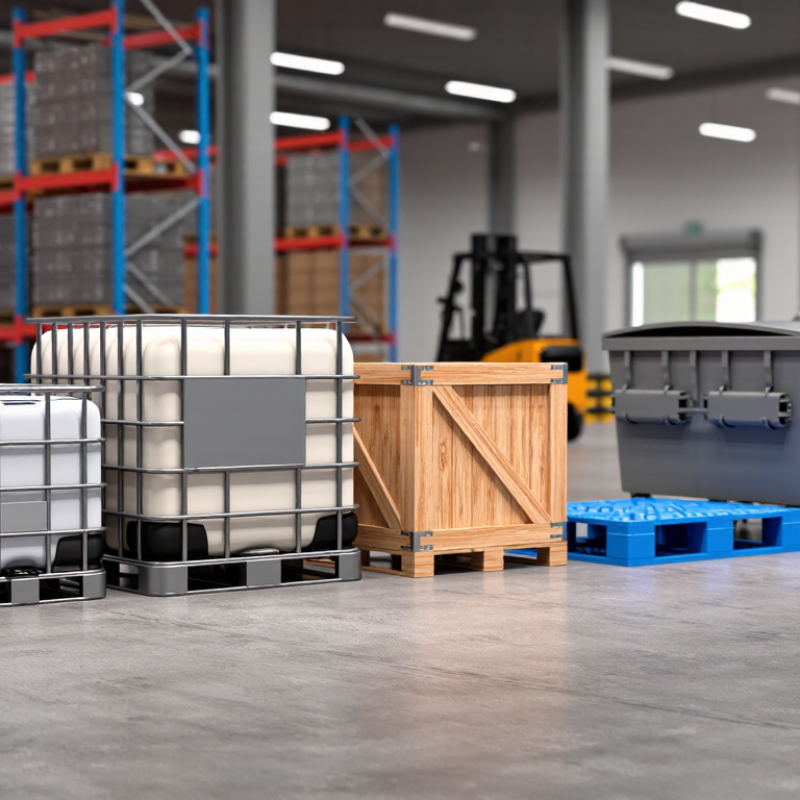
Global buyers often compare steel drums, plastic drums, IBC totes, pallet boxes, collapsible bulk containers, tank containers, and insulated containers. The best choice depends on cargo density, handling equipment, and shipping distance. A 1,000-liter IBC tote may reduce handling time, while steel drums can suit heavier materials and rough routes. Capacity alone is not enough.

Material performance matters. Check wall thickness, closure quality, leak resistance, and compatibility with the stored material. Food, chemical, and general industrial uses may require different documentation and testing. Containers should also match local transport rules and warehouse procedures. Ask for test reports, traceability records, and clear inspection dates. Do not rely on attractive photographs.

Stacking strength affects real costs. A container that fails under uneven pallet loads creates delays, waste, and safety concerns. Measure the full footprint, including valves, caps, and protective frames. Confirm forklift entry points before ordering. This small detail is often missed. Temperature exposure deserves attention too. Sun-heated metal can change internal conditions, while insulated designs may protect temperature-sensitive goods during long transfers.

Reusable containers can lower waste, but only when cleaning, return transport, and inspection are practical. A collapsible unit saves storage space, yet its folding mechanism may require closer checks. Tank containers offer efficient bulk movement, but filling limits and maintenance records need careful review. I have found that buyers sometimes compare unit prices while ignoring total landed cost. That approach looks efficient, but it is incomplete. Consider freight volume, storage space, service support, replacement parts, and regional availability before selecting a container.

Seven Leading Industrial Container Types and Their Best Uses

Global buyers need containers matched to the material, route, and handling equipment. The wrong wall thickness can turn a low-cost shipment into a costly delay. Rigid IBC totes suit liquid chemicals, food ingredients, and cleaning fluids in palletized volumes. Their cage, valve, and standard footprint support forklift movement. Confirm compatibility, stacking limits, and valve condition before loading. A small oversight matters.

Steel drums remain useful for oils, coatings, powders, and dense industrial liquids. They tolerate rough handling and temperature changes, but corrosion protection must match the contents. Plastic drums work well for water-based liquids and many non-corrosive materials. They are lighter and resist rust. Fiber drums can carry dry powders, granules, and pharmaceutical ingredients when moisture control is adequate. They are easy to handle, though their seams may need extra protection.

ISO tanks transport large liquid volumes across sea, rail, and road with fewer transfers. They require suitable fittings, pressure checks, and trained operators. Open-top containers help move bulk solids, machinery, and irregular loads. Pallet boxes organize parts, castings, and reusable production components inside factories and warehouses. For export, inspect corner posts, closures, labels, and lifting points. I have seen schedules fail because a container fit the product but not the loading bay. Selection should include cleaning methods, return logistics, and local handling capability.

International Standards, Shipping, and Regulatory Requirements

7 Best Industrial Containers for Global Buyers

Global buyers rarely need the “best” container; they need the safest match for cargo, route, and law. The 2024 UNCTAD Review of Maritime Transport notes that ships carry over 80% of world merchandise trade by volume. That scale makes small documentation errors expensive. Seven practical choices cover most industrial shipments: standard dry, high-cube, reefer, insulated, tank, open-top, and flat-rack containers. Dry and high-cube units suit boxed machinery. Reefers protect temperature-sensitive materials, while tanks handle approved liquids. Open-tops accept tall cargo. Flat-racks support oversized equipment. Insulated units help maintain temperature stability, but they cannot replace validated cold-chain control.

ISO 668 defines key external dimensions, while the ISO 1496 series addresses container strength and performance requirements. Buyers should inspect the CSC safety plate, corner castings, floor condition, and door seals before loading. Weigh the packed unit under SOLAS Verified Gross Mass rules. A missing or inaccurate VGM can delay a container at the terminal. For tank containers, confirm applicable IMDG, ADR, or local rules, plus product compatibility and pressure limits. Reefer shipments need set-point records, pre-trip inspection evidence, and a reliable power plan.

The World Bank’s Logistics Performance Index 2023 emphasizes tracking, customs, infrastructure, and shipment reliability. Those measures matter beyond freight price. A low-cost container becomes expensive when a seal, certificate, or temperature log fails. Buyers should request test certificates, packing instructions, emergency contacts, and insurance requirements in writing. One uncomfortable lesson remains: standards reduce risk, but cannot correct poor loading practice. Photographing bracing and seals helps, although photographs do not replace independent inspection.

Cost, Durability, and Supplier Selection for Global Buyers

7 Best Industrial Containers for Global Buyers

Industrial buyers commonly compare steel drums, plastic drums, IBC totes, fiber drums, pallet boxes, collapsible bulk containers, and insulated containers. Each option serves a different cargo profile. Steel drums resist impact and temperature changes, while plastic drums reduce corrosion risks. IBC totes offer efficient liquid storage and stacking. Fiber drums are lighter, but moisture can weaken them. Pallet boxes support repeated handling, whereas collapsible units save return-freight space. Insulated containers protect temperature-sensitive materials during long routes.

Cost should include more than the purchase price. A cheaper container may require thicker packaging, extra pallets, or frequent replacement. Weight also affects ocean and road freight. For example, a reusable IBC can lower handling costs, but cleaning and reverse logistics may increase expenses. Durability depends on wall thickness, closure quality, pallet design, and exposure to sunlight. Small failures become expensive.

Supplier selection needs practical verification. Request material specifications, load ratings, test records, production photos, and sample units. Check whether the supplier can meet destination-country packaging and transport requirements. Ask about inspection procedures, replacement policies, lead times, and spare components. A vague answer is a warning sign. I would not rely on a polished catalog alone. Samples can reveal warped lids, weak seams, or poor labeling. The difficult question is often overlooked: can the supplier deliver the same quality six months later?