NEED HELP FAST? We have over 40 years' experience with Bulk Material Handling, Packaging, and Processing. (979) 217-1480 GET A QUOTE
NEED HELP FAST? (979) 217-1480 GET A QUOTE

10 Best Industrial Containers for Storage and Shipping
Choosing the right container can protect products, reduce handling damage, and improve warehouse efficiency. However, the “best” option depends on product weight, dimensions, moisture exposure, transport distance, and reuse plans. This guide examines 10 industrial containers used for storage and shipping, including plastic totes, steel drums, bulk boxes, intermediate bulk containers, and insulated units.
Walter Soroka, a respected packaging educator, wrote, “Packaging is the science, art, and technology of enclosing and protecting products for distribution, storage, sale, and use.” His definition remains practical. A container is not merely a box or vessel. It controls movement, shields contents, supports labeling, and affects labor costs. Small details matter. A reinforced corner can prevent collapse. A secure lid can stop dust, leaks, and product loss.
Each recommendation in this article considers durability, load capacity, stackability, cleanability, handling, and long-term value. It also recognizes common limitations. A steel container may offer excellent strength, yet it can add weight and increase manual handling demands. A lightweight plastic unit may save space, but extreme temperatures can affect performance. No option is perfect.
The selections are intended for informed comparison, not automatic purchasing decisions. Users should confirm manufacturer specifications, compatibility, inspection requirements, and applicable shipping standards before deployment. Conditions vary. Real warehouses are rarely as predictable as product brochures suggest. This practical review focuses on reliable choices for businesses seeking safer, more efficient storage and shipping with industrial containers.
Industrial Containers: Purpose, Materials, and Common Applications
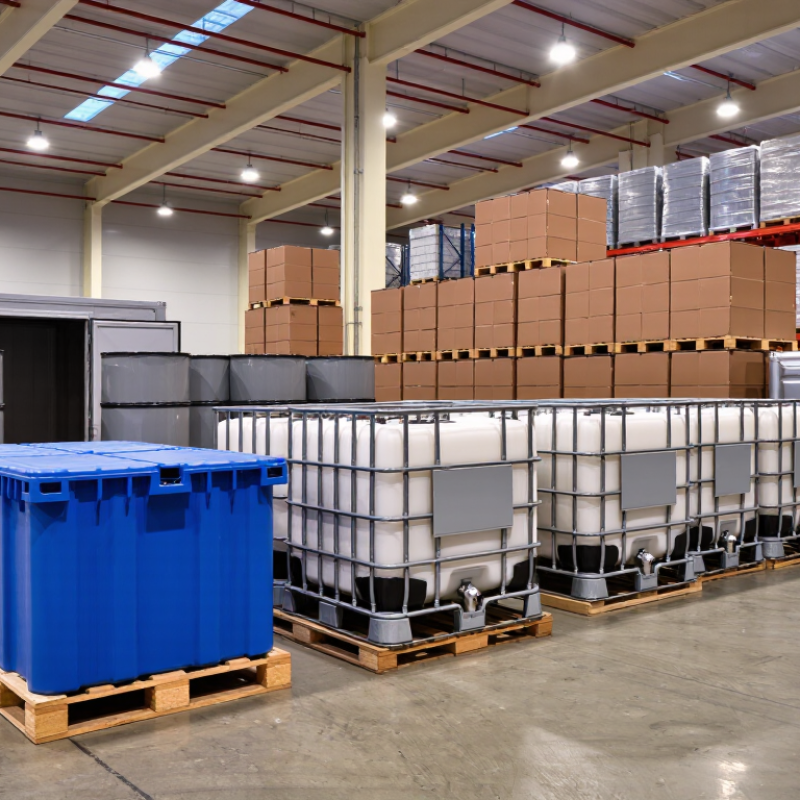
Industrial containers protect materials during storage, handling, and shipping. Their purpose determines the best design. Steel drums suit oils, powders, and heavy industrial liquids. Rigid plastic containers resist corrosion and remain relatively light. Wooden crates protect machinery, tools, and irregular equipment during transport.
Material choice affects durability, cleanliness, and handling costs. Steel tolerates impact and temperature changes, but it can rust without proper protection. High-density polyethylene resists moisture and many chemicals, though prolonged sunlight may weaken it. Fiber containers are lighter and often easier to recycle, but they perform poorly in wet environments. Intermediate bulk containers can hold large volumes while using less floor space. Still, every site has different risks.
Tips: Check seams, closures, labels, and lifting points before use. Match the container with the contents, storage temperature, and handling equipment. Keep incompatible materials separated. A damaged corner may look minor, but it can fail under stacking pressure. Document inspections with dates and photographs. This sounds excessive until a small leak reaches a warehouse floor.
Practical experience shows that container selection is rarely based on capacity alone. Cleanability, ventilation, stack strength, and return logistics also matter. Standard sizes simplify movement, but they may waste space around unusual loads. No container is perfect. Recheck the decision after real shipments, because field conditions often expose weaknesses that specifications miss.
10 Best Industrial Containers for Storage and Shipping - Industrial Containers: Purpose, Materials, and Common Applications
| Container Type | Typical Material | Common Capacity | Primary Purpose | Common Applications | Shipping Suitability | Key Advantages |
|---|---|---|---|---|---|---|
| Plastic Tote Bins | High-density polyethylene (HDPE) or polypropylene (PP) | 20–110 L | Organized storage and internal material handling | Parts, tools, components, hardware, and warehouse picking | Suitable for short-distance or palletized transport; use a secure lid for shipping | Reusable, washable, stackable, and resistant to moisture and many chemicals |
| Plastic Drums | HDPE | 30–220 L | Storage and transport of liquids or solids | Water-treatment chemicals, detergents, food ingredients, and powders | Suitable when the drum, closure, and contents meet applicable transport regulations | Lightweight, corrosion-resistant, and available with open-head or tight-head designs |
| Steel Drums | Carbon steel or stainless steel | 30–210 L | Heavy-duty storage and regulated transport | Oils, solvents, coatings, industrial chemicals, and hazardous materials | Well suited to long-distance and international freight when certified for the contents | Strong, puncture-resistant, and suitable for stacking and demanding handling |
| Intermediate Bulk Containers (IBCs) | HDPE bottle with galvanized steel or composite cage | 500–1,000 L | Efficient bulk storage and liquid distribution | Lubricants, liquid ingredients, agricultural products, and process chemicals | Designed for palletized road, rail, and sea freight; certification may be required | High volume-to-floor-space ratio, forklift access, and controlled dispensing |
| Fiber Drums | Spiral-wound or convolute paperboard with metal or fiber ends | 20–250 L | Dry-material storage and shipment | Powders, pigments, food ingredients, pharmaceuticals, and granules | Suitable for dry, non-sensitive goods; moisture protection depends on the liner and closure | Low tare weight, economical handling, and easy disposal or recycling options |
| Wooden Crates | Solid wood, plywood, or engineered wood | Custom-built; commonly 0.1–10 m³ | Protection of large, heavy, or irregular cargo | Machinery, motors, industrial equipment, and spare parts | Suitable for domestic and export shipping when wood-treatment rules are satisfied | High impact protection, customizable dimensions, and strong load-bearing capability |
| Wire Mesh Containers | Welded steel wire with a metal frame | 0.5–1.2 m³ | Reusable storage and returnable transport | Metal parts, automotive components, castings, and recyclables | Suitable for closed-loop logistics and palletized internal transport | Excellent visibility, ventilation, collapsible options, and forklift compatibility |
| Flexible Intermediate Bulk Containers (FIBCs) | Woven polypropylene fabric | 500–2,000 kg or approximately 0.5–2 m³ | Bulk handling of dry, flowable materials | Cement, minerals, resin pellets, grains, powders, and construction materials | Suitable for palletized freight and containerized shipping with appropriate lifting equipment | Lightweight, space-efficient when empty, and available with liners and discharge spouts |
| Insulated Shipping Containers | Expanded polystyrene, polyurethane foam, or insulated panels | 10–300 L internal volume | Temperature protection during transit | Food, biological samples, pharmaceuticals, and temperature-sensitive components | Suitable for parcel, air, and road freight when combined with qualified coolants or monitoring | Reduces temperature fluctuation and can be configured for chilled or frozen shipments |
| Open-Top Bulk Bins | HDPE, PP, steel, or reinforced composite material | 200–1,500 L | High-volume storage and batch collection | Scrap, aggregates, molded parts, agricultural goods, and production waste | Best for on-site movement or covered palletized transport; not ideal for weather-sensitive goods without a cover | Wide opening, fast loading, durable construction, and compatibility with forklifts or cranes |
Note: Capacity ranges are typical industry values. Actual performance, stacking limits, material compatibility, and transport authorization depend on the container design, contents, closure system, handling method, and applicable regulations.
Related Posts
-
2026 How to Choose Industrial Containers for Global Sourcing?
-
2026 Top Industrial Containers for Global Buyers
-
7 Best Industrial Containers for Global Buyers
-

2026 Best Industrial Containers for Global Buyers to Consider
-
Why Choose the Right Packaging Equipment for Your Business?
-

Why Is Packaging Equipment Essential for Global Buyers?